Manual therapy
Hands-on treatment for joint mobility and pain relief, followed up with active exercise.
Spine, neck and posture
The booking page may open in Hungarian: switch it to English with the language menu at the top. Our physiotherapists speak English.
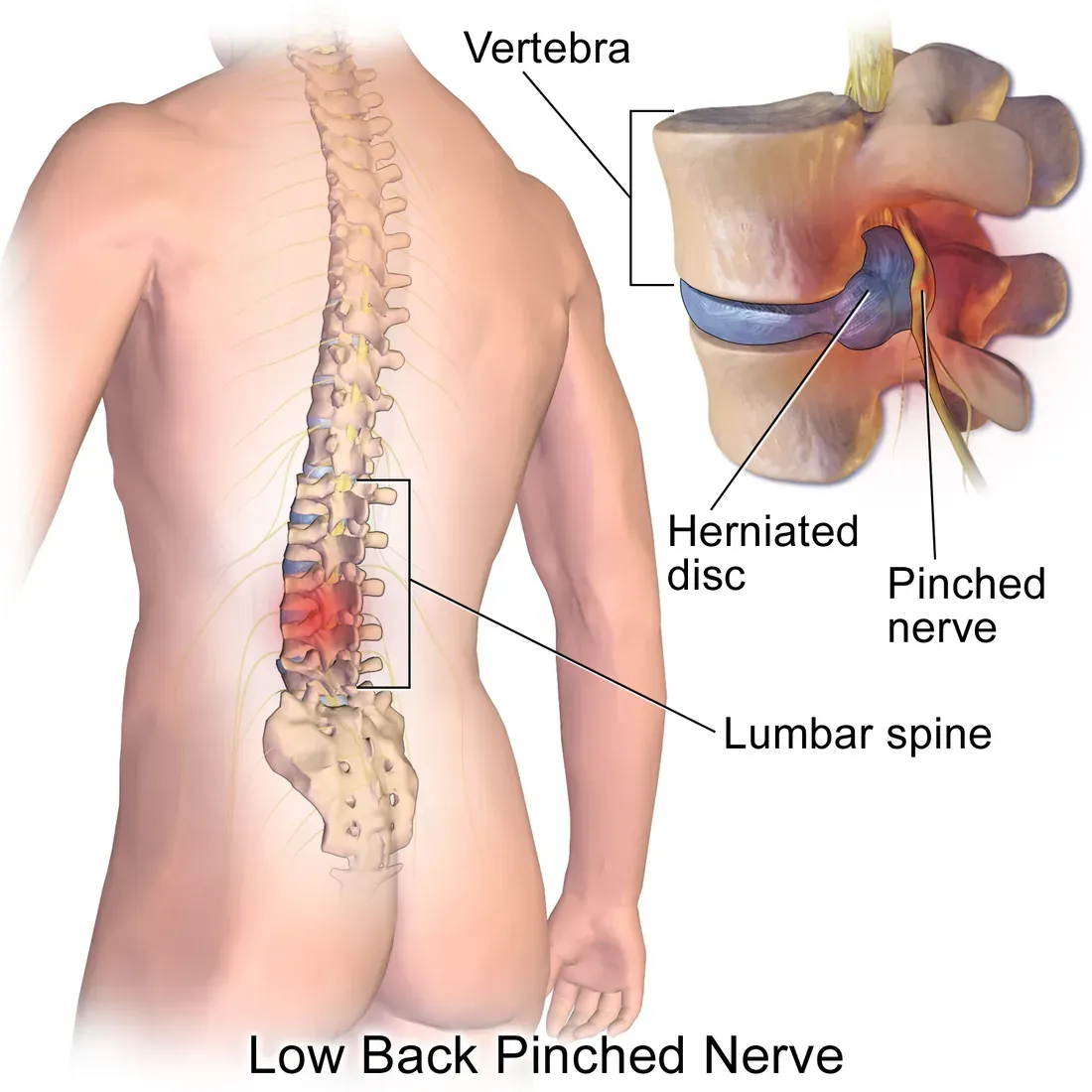
According to the sources, these are common:
Symptoms differ from person to person, and the same symptom can have more than one cause. A medical or professional examination can clarify the exact cause.
A slipped (herniated) disc is when the disc between two vertebrae bulges out and may press on a nearby nerve. It is most common in the lower back, and next most common in the neck. Not every disc problem causes symptoms: many people never know they have one. How the symptoms develop differs from person to person and cannot be predicted in advance.
The sources list ageing, lifting with poor technique, repeated bending and twisting, long periods of sitting or driving, little physical activity, being overweight and smoking as factors that raise the risk.
We look at your MRI or CT report if you have one, but we do not base treatment on the image alone: in the assessment we also check which positions and movements ease or worsen your symptoms. We test sensation, muscle strength and reflexes in the arm or leg. If we see increasing weakness or another warning sign, we recommend a medical examination.
The health sources cited below highlight these points. This is general information and does not replace a personal examination:
Complaints in this group that patients at MozgásKlinika Újlipótváros often mention:
In MozgásKlinika’s experience, manual therapy can also be used for a herniated disc after a proper assessment.
As well as the general warning signs below, with this problem also see a doctor if:
The treatment plan is always based on the assessment.
Hands-on treatment for joint mobility and pain relief, followed up with active exercise.
Active, personalised exercise therapy: movement control, strength and load tolerance, step by step.
Manual therapy with physiotherapy or physical therapy, in one 50-minute session.
Your history, a review of your scans or reports, and standardised manual and functional tests.
We place you on the right level of the MozgásPiramis® and draw up a personal plan.
Treatment begins in that same session.
We suggest the right therapist for you after the assessment. Meet the team.
Local, practical articles from the Váci út clinic’s blog.

Pain spreading down the leg, numbness or tingling? What sciatica is, when physiotherapy helps and which signs need a doctor now. MozgásKlinika Újlipótváros.
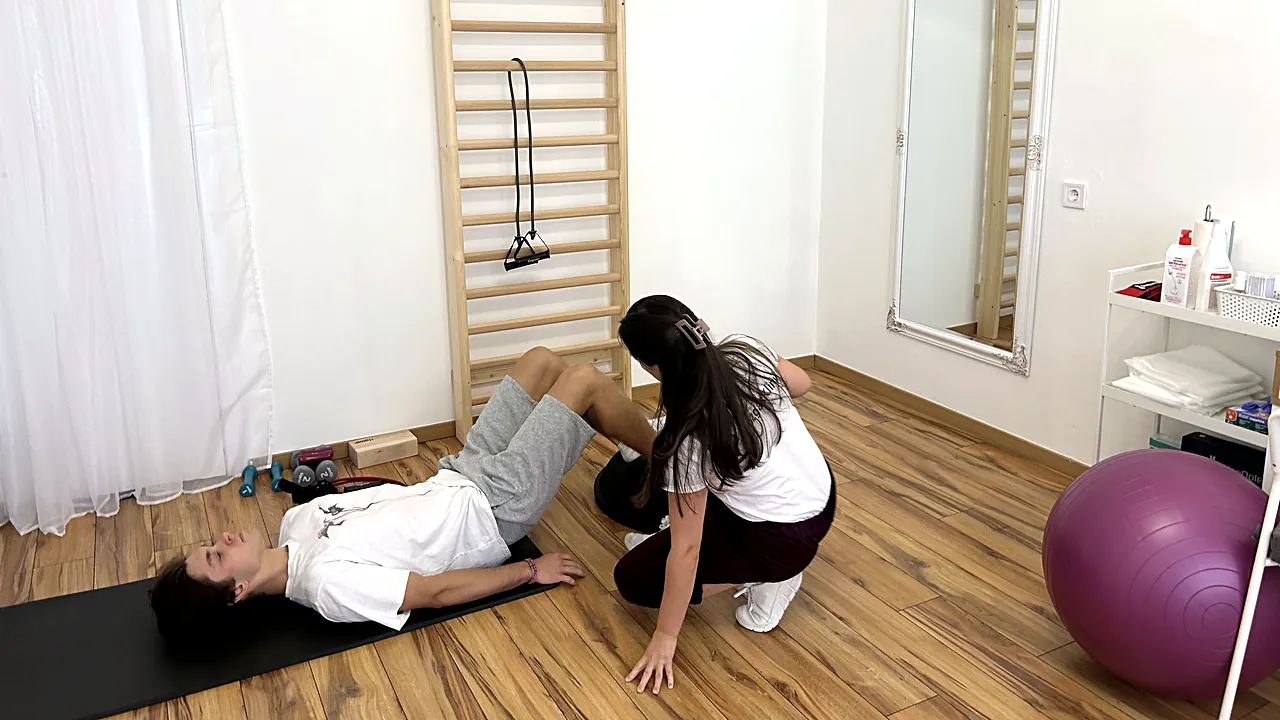
Lower back pain in the 13th district? When to wait, when to see a physio, when to see a doctor. MozgásKlinika Újlipótváros, Váci út 28, opposite Westend.
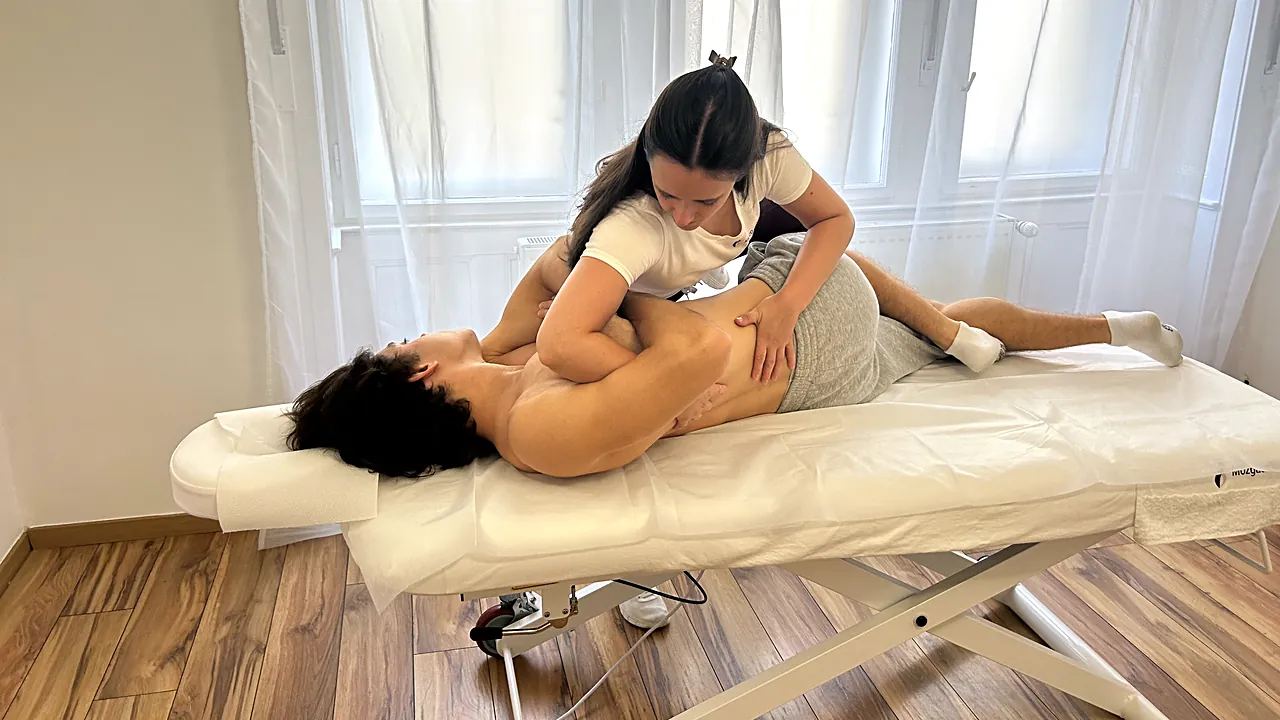
Physiotherapy or manual therapy? A plain comparison, and why your first assessment decides. MozgásKlinika Újlipótváros, Váci út 28, Budapest XIII.
No. You can book an appointment at MozgásKlinika Újlipótváros online or by phone without a referral. If you have earlier scans or reports (MRI, X-ray, CT), please bring them to your first visit.
The first consultation and assessment lasts 60 minutes and costs 24,990 HUF. The price covers the assessment, the review of your scans or reports, and physiotherapy and manual therapy in the same session.
The number of sessions cannot be guaranteed in advance: it depends on your individual response and on the assessment. On the first level of the MozgásPiramis®, the clinic recommends 12 sessions, two a week.
In more depth: the MozgásKlinika network’s professional article (in Hungarian) (opens in a new tab)
Exercise and explainer videos from the MozgásKlinika network (in Hungarian): YouTube (opens in a new tab) TikTok (opens in a new tab)
What this page says about symptoms, frequency and warning signs is based on the health sources below (checked: 2026-11-05). Some of them are in Hungarian.
Last updated:
This page is general information and does not replace an in-person assessment. Services, prices, equipment and opening times are subject to change. For current details, call us or see the pages of MozgásKlinika’s own clinics: our clinics.
The first consultation lasts 60 minutes, costs 24,990 HUF, and treatment starts in the same session. No referral needed.