If you’re not sure whether to book physiotherapy or manual therapy, here’s the short answer: you don’t have to work it out yourself. Manual therapy is hands-on treatment by the therapist; physiotherapy in the Hungarian sense (gyógytorna) is guided, targeted exercise. For most muscle and joint problems the two work best together. At MozgásKlinika Újlipótváros, on Váci út opposite Westend, your first assessment tells us how much of each you need – and treatment starts in that same session.
The terms get confusing fast, especially if you’re booking in a second language. Here’s what each one actually means.
What are gyógytorna, manuálterápia and fizikoterápia?
Gyógytorna: you move, the physiotherapist guides
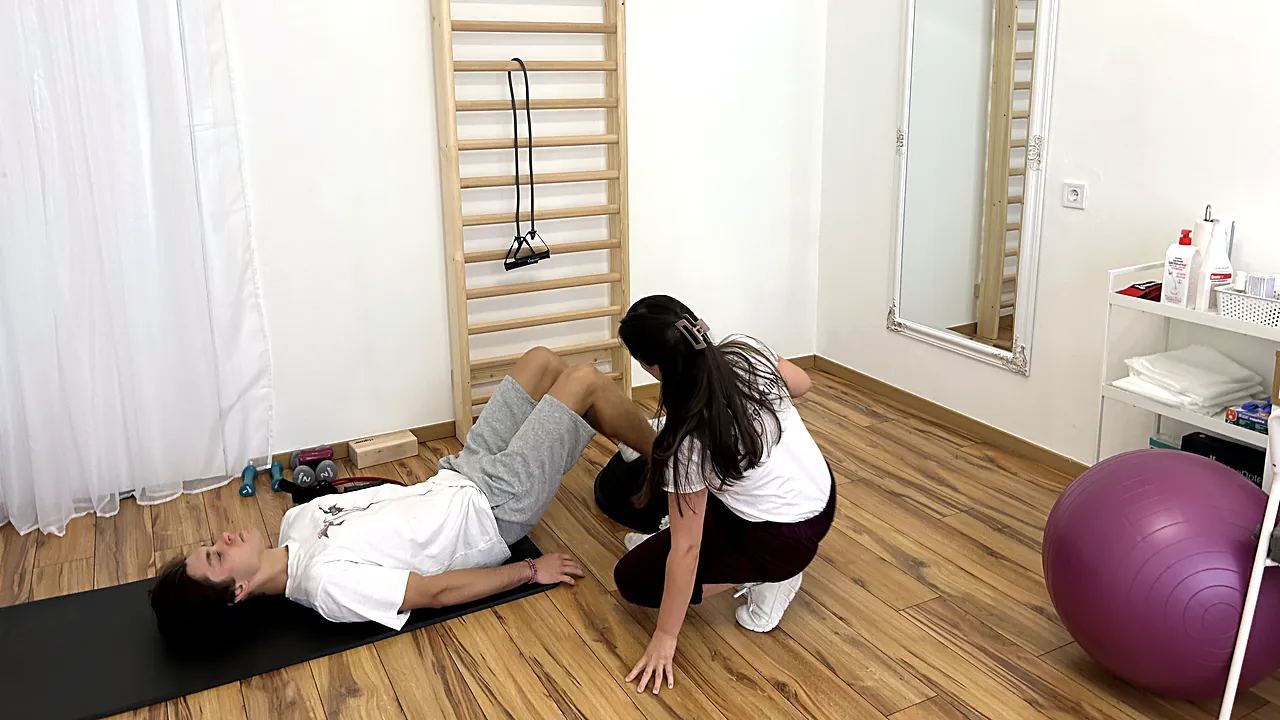
Gyógytorna is usually translated as physiotherapy, but it specifically means therapeutic exercise. The physiotherapist puts together exercises for your particular problem, and in the session you do the work: mobility, stability and strengthening drills, while they watch your form, correct it and gradually make things harder. You’ll usually leave with a few exercises to do at home.
This is the part that makes progress stick. Your muscles learn to hold on to what treatment has achieved. More on how our physiotherapists work: physiotherapist in the 13th district.
Manuálterápia: the therapist’s hands do the work
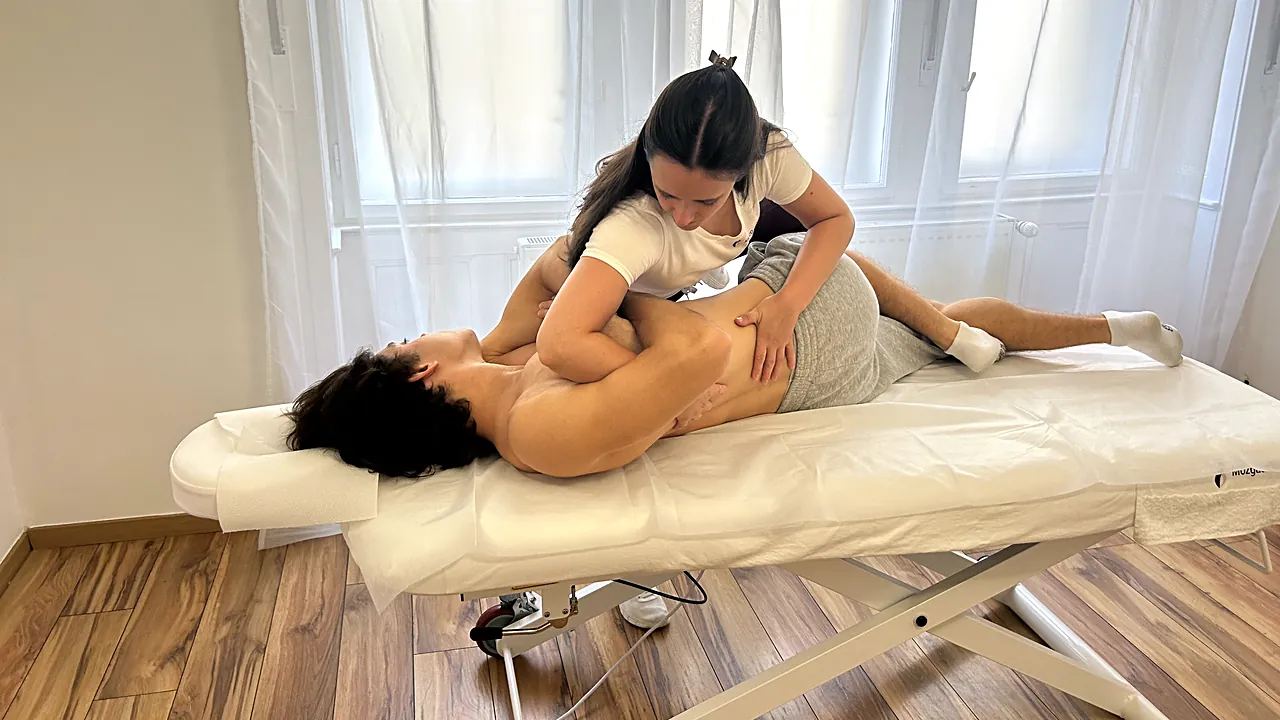
Manual therapy (manuálterápia) is hands-on treatment. The therapist finds which joint, muscle, ligament or connective tissue (fascia) is behind the pain, and treats it with specific techniques. You mostly lie or sit while they work.
For a stiff neck or a lower back that “locks” on one movement, manual therapy can help ease pain and free up movement sooner. Full details: manual therapy in Újlipótváros.
Fizikoterápia: devices and equipment
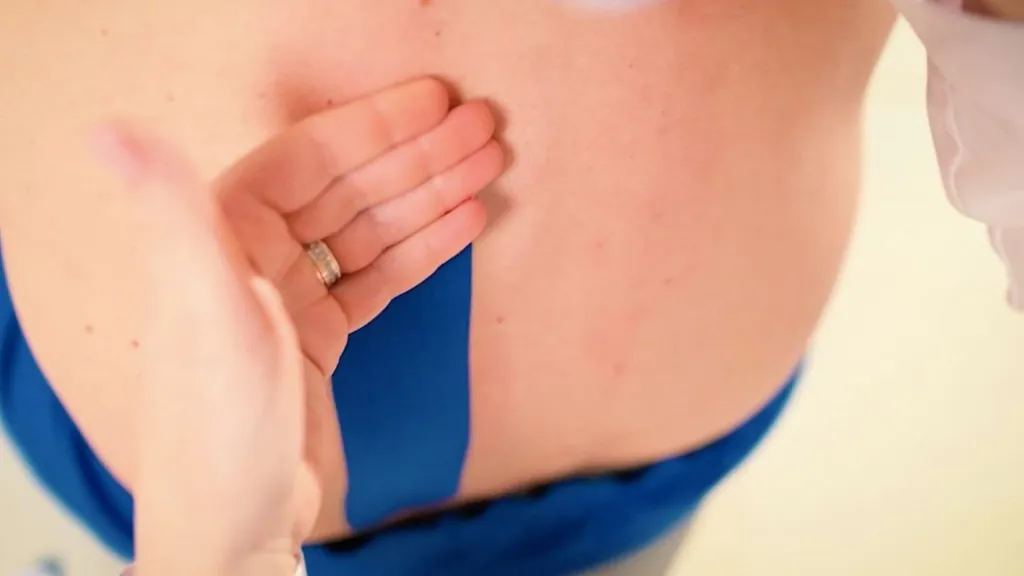
Fizikoterápia – physical therapy in the narrow Hungarian sense – uses physical agents: ultrasound, TENS, shockwave, cupping, kinesiology taping. With us it’s mainly a supporting act alongside hands-on work and exercise.
And “fizioterápia”?
That’s the umbrella. In everyday Hungarian, and in search results, fizioterápia often covers all three. So if you searched “physio 13th district” or “fizioterápia 13. kerület”, you’re in the right place – see our physiotherapy in the 13th district page.
Physiotherapy or manual therapy: the difference at a glance
| Gyógytorna (exercise physio) | Manuálterápia (manual therapy) | Fizikoterápia (devices) | |
|---|---|---|---|
| What is it? | Targeted, guided exercise | Hands-on treatment | Machine or device-based treatment |
| What happens in a session? | You do the exercises; the physio corrects and progresses them | The therapist treats; you mostly relax | A device works on the area |
| Typically used for | Strength, stability, posture, rehab after injury | Pain relief, restricted joints, tight soft tissue | Support, pain relief, circulation |
| How it fits in | Keeps the gains | Prepares the ground for movement | Alongside the other two, rarely on its own |
| Price | Current prices | same page | same page |
The takeaway is simple: they aren’t competitors. Manual therapy often opens the door; exercise keeps it open.
How do you know which to book? You don’t need to
A lot of people hesitate because the booking screen seems to ask them for a diagnosis. It doesn’t. Everything starts with a first assessment: we ask about your history, look at any scans or reports you bring (an MRI, for example), then use standardised manual and functional orthopaedic tests to find where the problem is coming from. That tells us the right mix of hands-on work and exercise for you – and the assessment is already treatment, not an empty check-up. Step-by-step details are in our first assessment guide.
When to see a doctor first
Severe pain after a fall or accident, spreading numbness or weakness in an arm or leg, problems controlling your bladder or bowels, back pain with a fever, or pain that gets worse at night and at rest: don’t start with physio – see a doctor, urgently if needed.
Book a consultation (opens in a new tab)
Why we combine them at MozgásKlinika
Because easing pain and staying better are two different steps. MozgásKlinika’s own method, the MozgásPiramis® (Movement Pyramid), splits recovery into five levels. Level 1 is about pain relief and circulation, with manual therapy and exercise in roughly equal measure, often supported by physical therapy devices. The clinic’s own protocol for this stage is 12 sessions, twice a week – though nobody can promise in advance exactly how many you’ll need, because that depends on how your body responds.
Further up the pyramid, exercise takes over: joint range of motion, strength, functional stability, then the return to sport or full activity. At the top sits Medical Fitness, personalised training led by a healthcare professional. The most common mistake? Stopping as soon as the pain eases. That’s when setbacks become more likely.
How it works with us:
- We map it out – we assess your symptoms and movement and find the real source of the pain.
- We tailor your treatment plan – deciding the mix of manual therapy, exercise and, if useful, physical therapy.
- We start in your first session – treatment begins on the day of your assessment.
Book a consultation (opens in a new tab)
What this means if you live or work nearby
With two sessions a week, distance matters. If you work in one of the offices along Váci út and spend most of the day sitting, neck and back problems often respond first to manual therapy, while exercise helps stop long hours at the screen from bringing the pain back. For runners on Margitsziget coming back from an injury, the focus tends to be on gradual reloading – in other words, exercise.
The clinic is at Váci út 28, on the mezzanine (félemelet), with a lift a few steps from the entrance. The M3 metro stops at Lehel tér and Nyugati pályaudvar are both close, trams 4 and 6 run at Nyugati tér, and if you drive you can park in the Westend underground car park and cross Váci út. It’s about a 2–3 minute walk from the Lehel tér metro exit and about 8 minutes from Nyugati pályaudvar. Full directions: finding us near Westend.
Frequently asked questions
Can I book manual therapy straight away, without an assessment?
Your first visit is always an assessment, but it already includes treatment: if manual therapy is right for you, you’ll get it that day. So you don’t need to guess in advance.
How much do physiotherapy and manual therapy cost?
Current fees and session passes are on our prices page. Prices can change, so it’s worth checking there before you book.
Can I pay with a health fund, SZÉP card or foreign insurance?
You can pay by cash, bank card or SZÉP card, and ask for a Hungarian health-fund (egészségpénztár) invoice – see health funds and SZÉP cards. Please note: we issue Hungarian invoices only, can’t fill in forms for foreign insurers, and claiming reimbursement is your responsibility.
How many sessions will I need?
That can’t be promised up front. The clinic’s Level 1 protocol is 12 sessions, twice a week, but your actual number depends on your assessment and how you respond.
Still stuck on the booking screen? Just choose the consultation. We’ll work out the rest together and get started the same day. You can also call us on +36 30 790 6270.