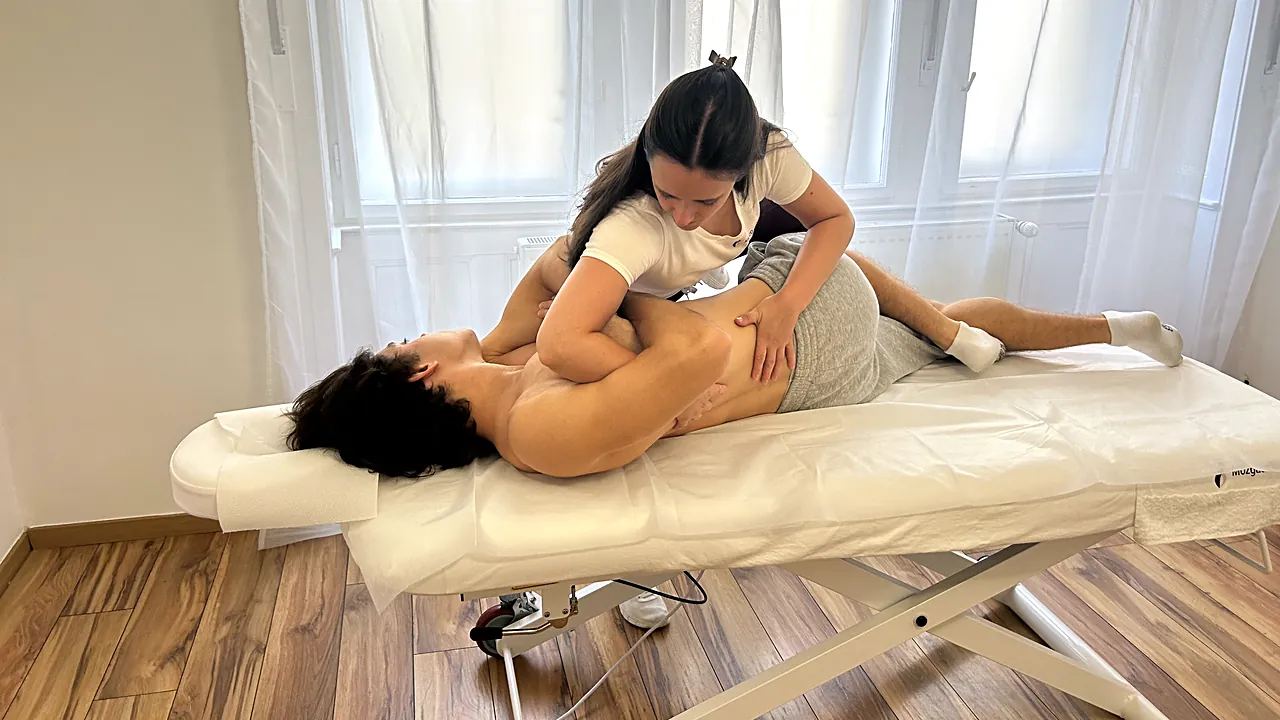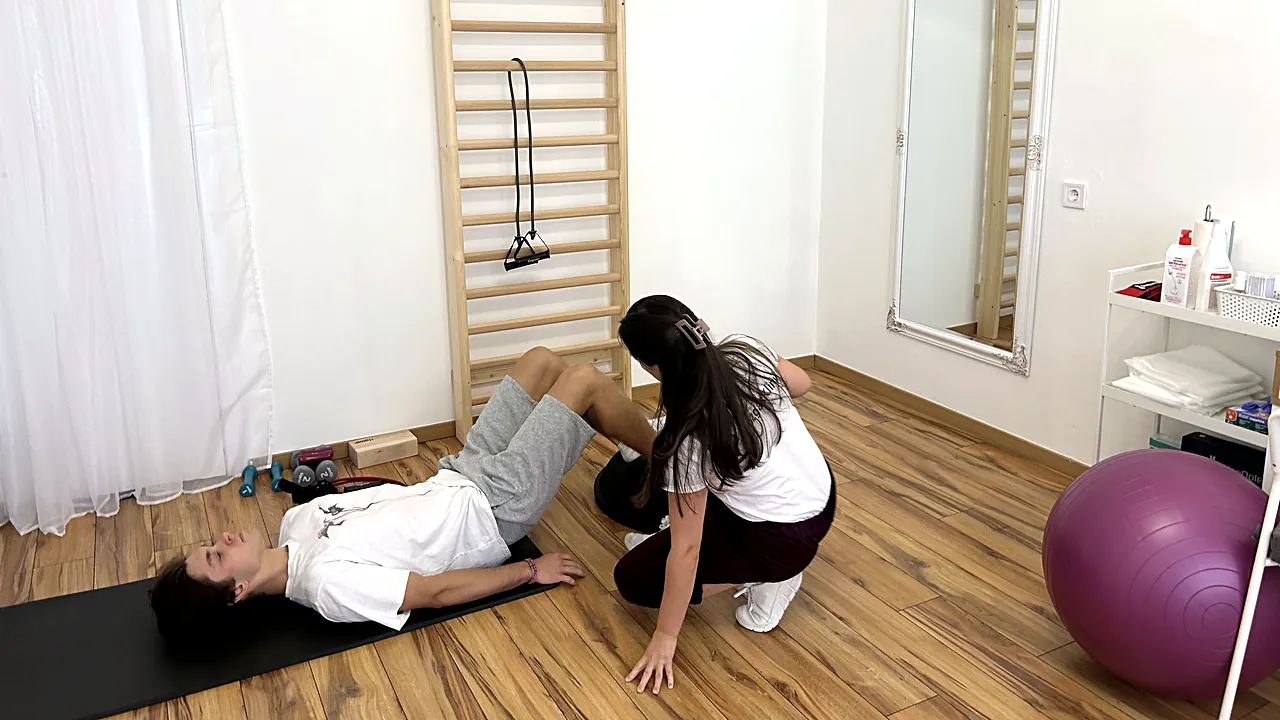
You will not find a “5 exercises for back pain” list on this page, and that is deliberate. The same movement can ease one person’s pain and worsen another’s, depending on where the problem comes from, how recent it is and what your body can handle right now. So at our clinic, home exercises are always chosen, taught, checked and adjusted for you by your physiotherapist.
Why home exercise matters
The time you spend in the treatment room is an hour or two a week. Change needs more regular stimulus than that. The UK NICE guideline on low back pain and sciatica (NG59) also puts exercise therapy first, and recommends manual therapy only as part of a treatment plan that includes active exercise. That is how we work too: hands-on treatment and exercise go together.
How we choose your exercises
- Assessment. At the first visit your physiotherapist looks at what triggers and what eases your symptoms, how you move and how strong you are.
- A few targeted exercises. We usually start with a few exercises, not ten, so they actually fit into your day.
- Taught in the clinic. We go through each exercise together until you are confident you are doing it right.
- Checked and adjusted. At the next visit we look at how your body responded and make the exercises harder, easier, or swap them.
When to stop and tell your physiotherapist
- if you feel a sharp, stabbing pain during an exercise
- if the pain is still worse hours after exercising than it was before
- if new numbness, tingling or weakness appears
- if you are unsure whether you are doing it right
Do not push through: skip the exercise and tell your physiotherapist at the next visit or by phone.
See a doctor straight away or call 112 if you notice problems controlling your bladder or bowels, numbness around your genitals or bottom, or leg weakness that is quickly getting worse.
Beyond the exercises: general activity
Home exercises do not replace general physical activity. The WHO recommends that adults do at least 150 to 300 minutes of moderate-intensity (or 75 to 150 minutes of vigorous) activity a week, plus muscle-strengthening activity on at least two days a week; the NHS guidance is similar. How much of that, and what kind, suits you right now is something we also discuss at the assessment.