Scoliosis means the spine curves and twists to the side. According to the NHS it can affect people of any age, most often starts between the ages of 10 and 15, and in most cases is not a sign of anything serious. In adults, the most common problem it causes is back pain.
This article is for adults. MozgásKlinika Újlipótváros treats patients aged 18 and over only; for scoliosis in children and teenagers, start with the family doctor or a paediatric orthopaedic specialist.
How do you know you have scoliosis?
Signs listed by the NHS include a visibly curved spine, uneven shoulders, one shoulder, hip or side of the ribs sticking out, and clothes not fitting well. The diagnosis and the size of the curve are established by a doctor, using an X-ray. If you think you may have scoliosis, see your family doctor first.
What can you realistically expect from physiotherapy?
The NHS page on adult treatment says treatment mainly aims to relieve pain. Back exercises taught by a physiotherapist are unlikely to improve the curve, but may help with the pain. The NHS also advises speaking to a healthcare professional, such as a doctor or physiotherapist, before starting a new exercise programme if you have scoliosis.
So at our clinic the goal is not to “straighten” the spine, but to:
- ease back and lower back pain
- improve trunk strength and load tolerance
- help you move, exercise and work safely
How it works at our clinic
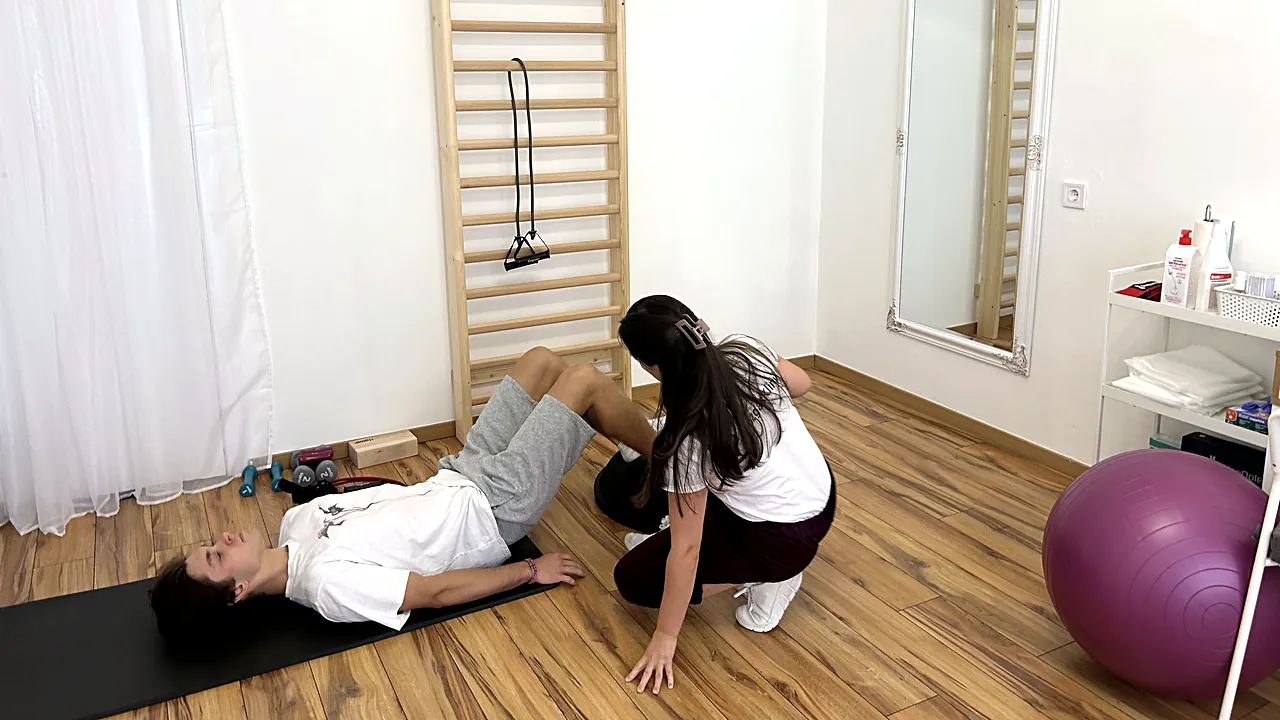
The first 60-minute visit starts with an assessment: the physiotherapist asks about your symptoms and looks at your posture, spinal movement and strength. If you have an X-ray or medical results, bring them. You then get a few exercises chosen specifically for you to do at home as well, combined with manual therapy where appropriate. We explain how home exercises work in a separate article.
No referral is needed, and you can book online. The clinic is at Váci út 28, opposite WestEnd.
When to see a doctor
- if the curve is visibly getting worse
- if the pain is increasing, or spreading into your leg with numbness or weakness
- if you notice any new or unusual symptom
If you suddenly have problems controlling your bladder or bowels, or numbness around your genitals or bottom, see a doctor straight away or call 112.