Jaw pain (temporomandibular disorder, TMD) is a problem with the joint in front of your ear, the chewing muscles, or both. It is common and usually not serious: for many people it eases within a few weeks on its own or with simple steps at home. When it does not, a dentist and a physiotherapist working together can usually help the most. This article covers what causes it, which signs not to wait on, and what you can do today. MozgásKlinika Újlipótváros is at Váci út 28, opposite Westend; if you have a jaw problem, please call us before booking.
What is the jaw joint, and why does it hurt?
The jaw joint (temporomandibular joint, TMJ) sits just in front of each ear: put a finger there and open your mouth, and you will feel it move. It is one of the busiest joints in the body, working every time you chew, talk, swallow or yawn. A small disc inside the joint keeps the movement smooth, and strong chewing muscles work around it.
Depending on where the pain comes from, TMD falls roughly into three types:
- Muscle-related: the chewing muscles (on the temples, the cheeks and the angle of the jaw) are overworked, tight and tender. This is the most common type.
- Joint-related: the joint itself is irritated or inflamed; the pain sits in front of the ear and gets worse when you chew.
- Disc displacement: the disc sits further forward than usual. This causes the typical click on opening and closing, and less often the mouth gets stuck. We cover this separately: does your jaw click?
There is rarely a single cause. Several things usually add up: clenching or grinding (by day or in your sleep), long-term stress, a lot of chewing gum, nail biting, a hard bite or a long dental appointment, a blow to the face, and sometimes joint wear or an inflammatory joint condition. The position of your head and neck can play a part too: when you spend eight hours a day leaning over a laptop, neck and jaw muscle tension often go together, although the link is not equally strong for everyone.
What are the symptoms?
Typical TMD symptoms:
- a dull or sharp ache in front of the ear, in the jaw or at the temple, worse when you chew or yawn
- a tight jaw and tired chewing muscles in the morning (often a sign of clenching at night)
- clicking, popping or grating when you open or close your mouth
- limited opening: biting into a sandwich is harder, and your mouth does not open as far as it used to
- headache at the temples, ear pain or a feeling of fullness in the ear with no cause found on ear examination
- tension in the neck and shoulders
Ringing in the ears (tinnitus) and dizziness can come with jaw problems, but they have many other possible causes. If you have them, have an ear, nose and throat (ENT) doctor check you first. We do not promise that treating the jaw will stop tinnitus.
Don’t wait with these
Call 112 if your jaw (especially on the left) hurts together with chest pressure, shortness of breath, sweating or nausea, or comes on with exertion: this can be a sign of a heart problem.
See a doctor promptly if:
- you cannot close your mouth, or it suddenly will not open (out-of-hours service, oral surgery)
- it hurts after a blow, a fall or an accident, it is swollen, or your bite has shifted
- you have a fever, or swelling or redness over the face or the joint
- you are over 50 and have a new headache at the temples, jaw pain that builds up as you chew, or changes in your vision
- your face is numb, or you have unexplained weight loss or strong pain at night and at rest
- the pain is linked to one tooth, or a tooth is sensitive to hot or cold: that is a job for your dentist
Who should you see for jaw pain?
Jaw problems sit between several specialties, so it helps to know who does what:
- Dentist, oral surgeon or TMJ specialist dentist (gnathologist): rules out a dental cause, checks your bite, recognises disc displacement, and can make an occlusal splint (night guard) if you need one. If the pain is new, strong or started after dental work, go here first.
- GP: pain relief medication, further tests and referrals.
- Physiotherapist or manual therapist: treatment of the chewing and neck muscles, jaw exercises, improving how far your mouth opens, and teaching you how to protect the joint in daily life. According to the US National Institute of Dental and Craniofacial Research (NIDCR), jaw exercises and hands-on treatment may improve function and relieve pain.
What usually helps most is when these go together: the dentist rules out a dental cause and protects your teeth, and the physio works on the muscles, the joint movement and your habits. Only a small share of jaw problems ever need surgery, and almost always only after months of conservative care have not helped.
Jaw problems at MozgásKlinika Újlipótváros
We have a dedicated treatment for jaw joint problems: jaw manual therapy. The first visit is a 50-minute jaw joint assessment (24,990 HUF), and no referral is needed. If your symptoms point to a dentist or an oral surgeon first, we will tell you. Questions before you book? Call us on +36 30 790 6270.
What can you do at home today?
The first step for most jaw problems is to rest the joint and change a few habits. Most people can safely start with these:
- “Lips together, teeth apart, tongue on the roof of your mouth.” At rest, your teeth should not touch. Check several times a day: if you are clenching, let go.
- Softer food for a few days: soups, stews, smaller bites. Avoid hard, chewy food (tough meat, baguette crust, whole apples), and don’t take big bites.
- No chewing gum, and don’t chew pens, nails or the inside of your cheek.
- Support your chin with your fist when you yawn, so your mouth doesn’t open too wide.
- A warm compress on the chewing muscles for 10–15 minutes can help them relax. After a fresh knock or swelling, use cold instead.
- Don’t rest your chin on your hand at your desk, and avoid sleeping face down with your cheek pressed into the pillow.
- Watch your stress: clenching often gets worse on tense, deadline-heavy days. A short breathing exercise, a walk and regular sleep all count.
We describe simple, gentle jaw exercises and how to break a daytime clenching habit in a separate article: jaw exercises and teeth clenching for desk workers. If your neck is often stiff too, read our article on office neck pain.
What happens at physiotherapy?
If there are no red flags, and a dentist has ruled out a dental cause (or we agree on that together), the physiotherapist starts with an assessment:
- Questions: when it started, what makes it worse, whether you clench, whether the jaw clicks or gets stuck, and what a normal day looks like for you.
- Examination: how far and in which direction your mouth opens, whether the jaw drifts to one side, and how the chewing and neck muscles feel. Your neck and head posture are checked too, because they often work together.
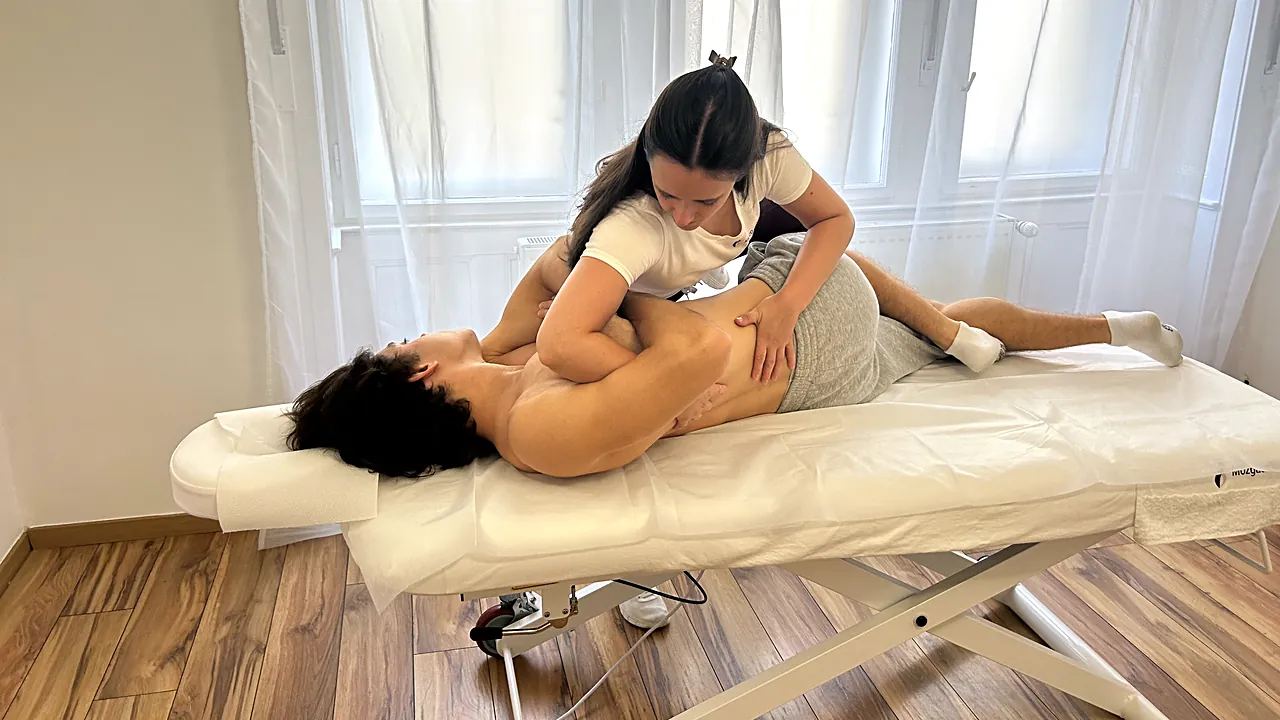
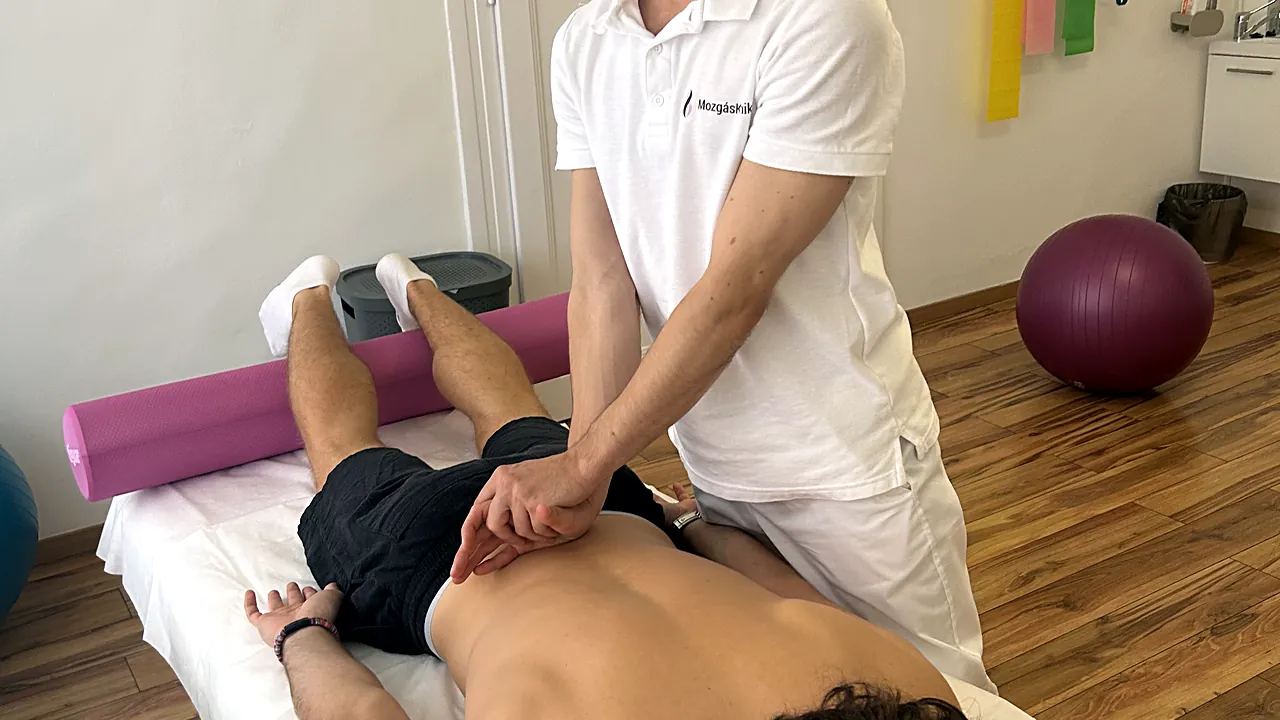
- Treatment plan: this may include hands-on release of the chewing and neck muscles, gentle mobilisation of the joint, and always home exercises you can do in a few minutes a day.
Nobody can tell you in advance exactly how many sessions you will need; a lot depends on how long the problem has lasted and how far you can change your daily habits. We describe the first visit in our article on the first physiotherapy assessment, and hands-on treatment in our article on manual therapy.
Frequently asked questions
Does jaw pain go away on its own?
Often, yes. Many jaw problems ease on their own within a few weeks or months, especially if you rest the joint and stop clenching. If it has not improved after two or three weeks, is getting worse, or your mouth opens less, get a professional opinion.
Should I see a dentist or a physio first?
If the pain is new, strong, linked to a tooth, or started after dental work, see a dentist first. If the dentist finds no dental cause and the problem is mainly in the muscles, the opening or the neck, a physiotherapist can help a lot. The two are not either-or.
Do I need a referral?
Not with us. If you have a dental or medical report, a panoramic X-ray or an MRI, bring it to your first visit.
Will the treatment hurt?
The chewing muscles can be tender to the touch, but treatment should never be very painful: the therapist explains each step first, and you can say stop at any time. Some temporary muscle soreness after the first session is possible.
Do you treat jaw problems at MozgásKlinika Újlipótváros?
Yes, that is what our jaw manual therapy is for. It is provided by physiotherapist Anna Szőke, and the first visit starts with a jaw joint assessment (50 min, 24,990 HUF). If you need a dentist or an oral surgeon first, we will tell you.
Jaw pain is unpleasant but rarely dangerous, and in most cases it responds well to treatment. Start by resting the joint and letting go of clenching; if it does not improve, get help from a dentist and a physiotherapist. If you live or work in District XIII, near Váci út, book a jaw assessment, or call us if you have questions first.