Manual therapy (manuálterápia in Hungarian) is hands-on treatment: the therapist works on your joints, muscles and the connective tissue around them (fascia) to ease pain and get you moving freely again. If you’re looking for manual therapy in Újlipótváros or anywhere in Budapest’s 13th district (XIII. kerület), MozgásKlinika Újlipótváros is at Váci út 28, right opposite Westend. Here, hands-on treatment is always paired with exercise therapy, because the aim is to deal with what’s causing the pain, not just quieten it for a week.
What does a manual therapist actually do?
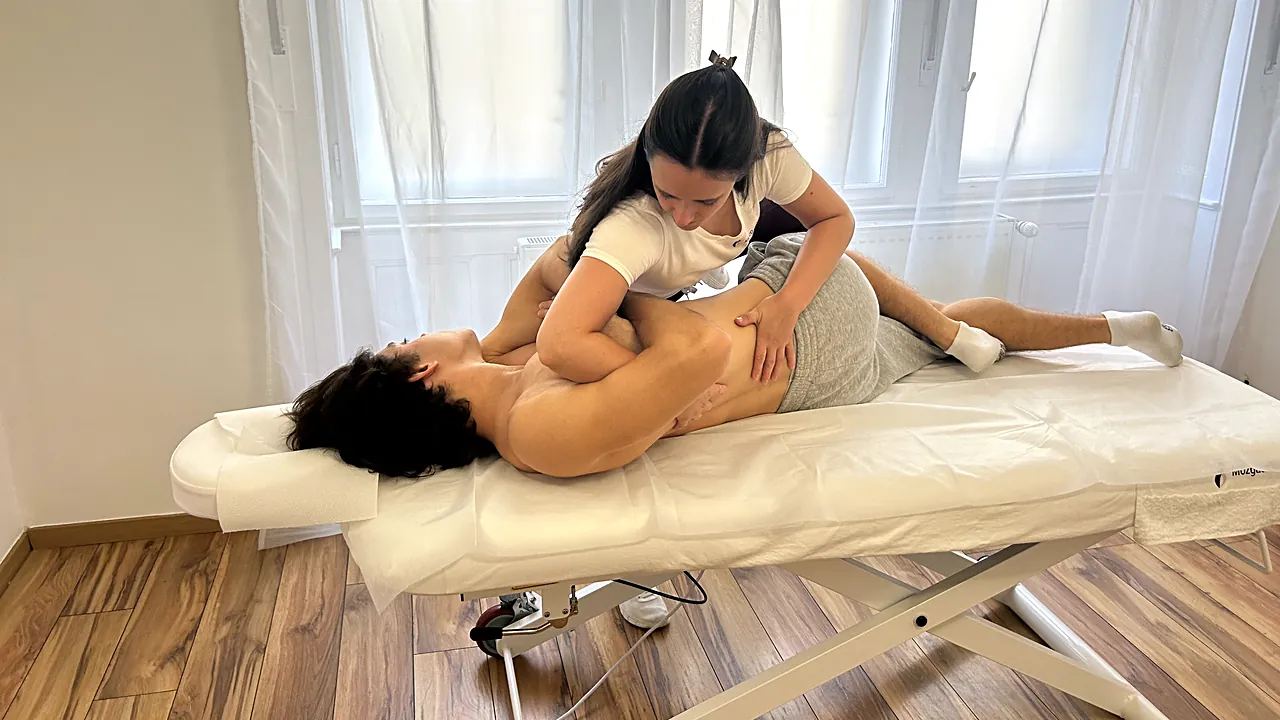
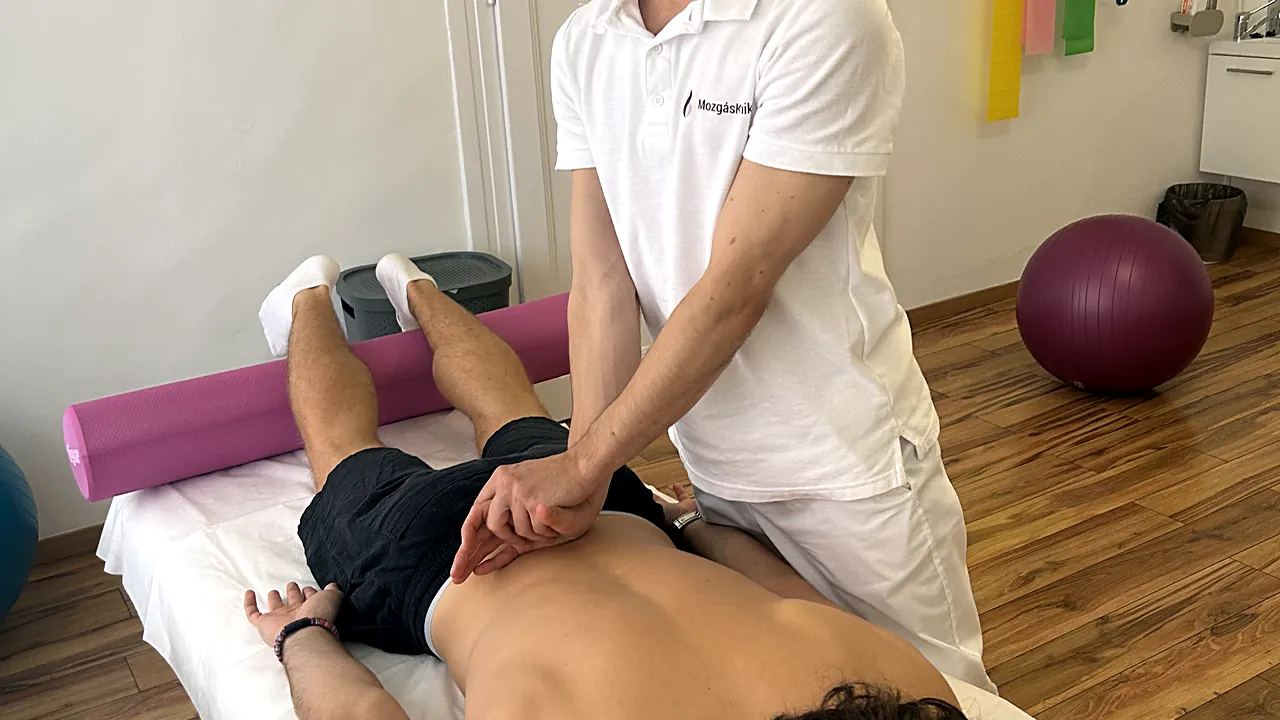
Manual therapy is Level 1 of MozgásKlinika’s MozgásPiramis® (Movement Pyramid) method. At this stage the therapist first works out which tissue or joint is actually producing the pain, then treats it by hand: moving stiff joints, releasing tight muscles, working on restricted fascia. The goal is pain relief and better circulation. Everything that follows builds on it.
It isn’t a massage. A manual therapist examines first – testing how a joint moves and where movement gets stuck – and shapes the treatment around what they find.
At this level, hands-on work is often combined with physical therapy tools such as ultrasound, shockwave or kinesiology tape. There’s more on those in our guide to physiotherapy options in the 13th district.
Who can manual therapy help?
Across the MozgásKlinika network, manual therapy most often comes up for:
- low back pain, lumbago and disc herniation (lower back or neck)
- neck pain and posture-related tension
- shoulder, wrist and hand pain, including tunnel syndromes
- hip and knee pain
- jaw joint (TMJ) problems
- tennis elbow and golfer’s elbow
- sprained ankles, Achilles problems and other sports injuries
If you spend your days at a screen in one of the Váci út office buildings, a stiff neck and a back that aches by evening probably sound familiar – see our article on lower back pain in the 13th district. Runners doing laps of Margitsziget more often come in with knees, ankles and Achilles tendons. Shoulder pain turns up at every age; we’ve written about it separately.
For older neighbours, a gentler form of manual therapy can also be an option, adapted to bone health and general condition.
Not sure whether you need manual therapy or gyógytorna (physiotherapy based on therapeutic exercise)? Here’s the difference between the two – though you don’t have to decide in advance. We’ll work it out together.
Book a consultation (opens in a new tab)
What does a session feel like?
Your first visit starts with an assessment, but treatment begins in that same session – our article on what happens at your first assessment walks you through it. Wear something comfortable, and bring any previous scans or reports (MRI, X-ray) if you have them.
You’ll usually lie on a treatment table while the therapist moves your joints, applies pressure to tight spots and stretches the tissue. It can be uncomfortable and sometimes feels like firm pressure. It shouldn’t be unbearable. If it is, say so and the therapist will adjust straight away.
Some people feel mildly sore, a bit like after a workout, for a day or two afterwards.
Why we pair manual therapy with exercise therapy
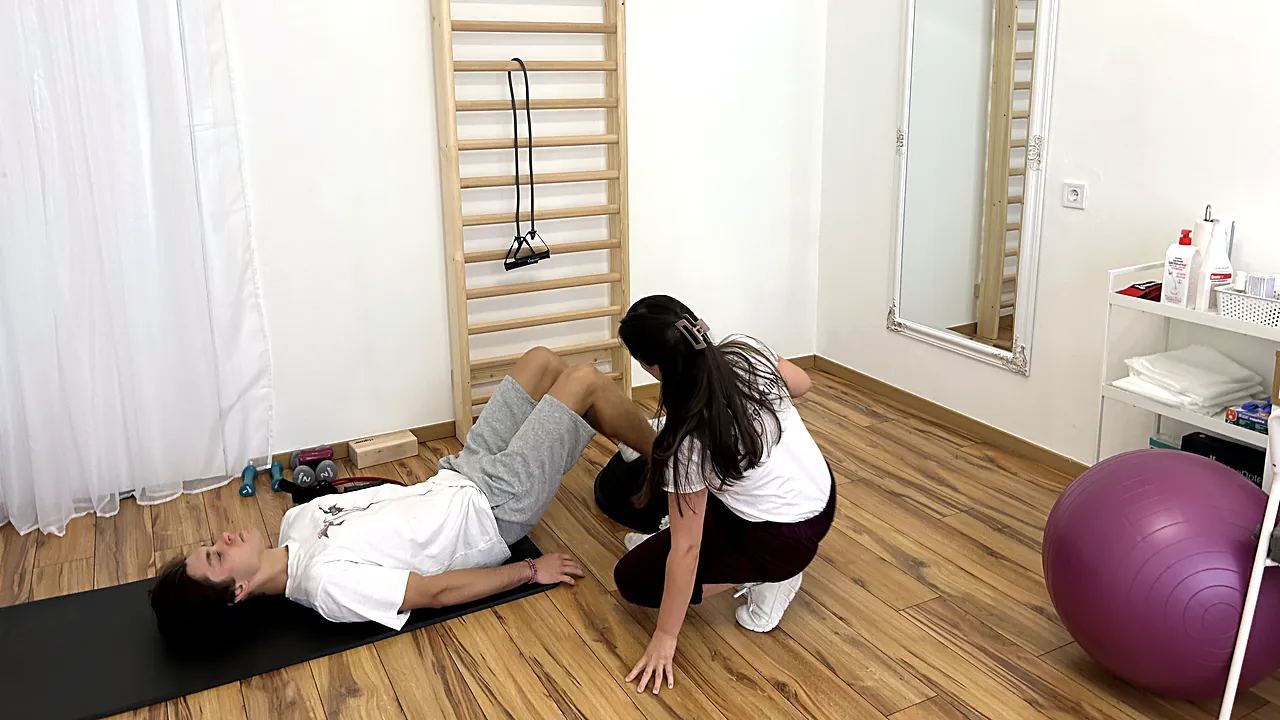
Because less pain isn’t the same as recovery. If a joint keeps locking up because the muscles around it are weak, or because you sit in the same awkward position for eight hours a day, hands-on treatment can bring relief while the cause stays put, and so does the chance of it coming back. That’s why Level 1 of the MozgásPiramis® follows the clinic’s protocol of 12 sessions, twice a week, split roughly evenly between manual therapy and exercise therapy: the hands-on work makes movement possible again, and the exercises teach your body to use it.
This is also the stage where most people drop out, usually the moment the pain eases. We see that as a mistake, because it’s exactly when problems tend to return. The higher levels – joint range of motion, strength, functional stability, return to full activity – are there to make the improvement last.
How we work with you
- We map out what’s behind your complaint: history, scans, targeted manual and functional tests.
- We tailor your treatment plan to you, based on the MozgásPiramis® and fitted around your goals and your week.
- We get started on treatment at your very first visit – you don’t just get examined, you get treated.
Prices and multi-session passes are all in our guide to physiotherapy and manual therapy prices.
Book a consultation (opens in a new tab)
When manual therapy isn’t the right first step
Sometimes hands-on treatment isn’t appropriate, or you need to see a doctor first.
See a doctor first if you have
- Numbness around the groin and buttocks, or new problems controlling your bladder or bowels – this is urgent: call a doctor or go to A&E straight away.
- Weakness in an arm or leg that’s getting worse.
- Severe pain after a fall, accident or blow.
- Back pain with fever or unexplained weight loss.
- Pain that doesn’t ease at night or at rest.
- Chest pain spreading to the arm or jaw, or shortness of breath – call 112.
With certain conditions – a recent fracture, advanced osteoporosis, acute inflammation, or if you take blood thinners – the therapist will avoid some techniques or ask for a doctor’s opinion first. That’s why we ask about your medical history and medication at the first visit, so please mention anything like this.
Manual therapy in Újlipótváros, close to home and the office
The clinic is on the mezzanine floor (félemelet) of Váci út 28, between Lehel tér and Nyugati, opposite Westend and near the DM on Váci út. There are a few steps, then a lift. If you drive, park in the Westend underground car park and cross Váci út. By public transport, the easiest stops are Lehel tér and Nyugati pályaudvar on the M3 metro line, or Nyugati tér on trams 4 and 6.
From Újlipótváros itself, around Pozsonyi út and Szent István park, we’re close by (about an 11-minute walk from Szent István park), and if you work along Váci út a session can fit before or after the office (Monday to Friday, 8:00–20:00). Step-by-step directions are in our guide to finding us.
Frequently asked questions
Do I need a referral for manual therapy?
No. As a private clinic we see patients without a referral – just book. Bring any recent scans and we’ll go through them together.
How much does manual therapy cost in Újlipótváros?
At the Újlipótváros clinic a 50-minute manual therapy session is 24,990 HUF and the 60-minute first consultation is 24,990 HUF. You can pay by cash, bank card or SZÉP card, and we can issue invoices for Hungarian health funds. Please note: we issue Hungarian invoices only, we can’t fill in forms for foreign insurers, and claiming any reimbursement is up to you.
How many sessions will I need?
Nobody can guarantee a number in advance. The Level 1 protocol is 12 sessions, twice a week, but the actual course depends on how your body responds, and your therapist reassesses as you go.
Does manual therapy hurt?
It can be uncomfortable, especially on tight spots, but it shouldn’t be unbearable. If it’s too much, tell your therapist and they’ll change the technique.
When pain starts shaping your day
Plenty of people put it off for months and quietly get used to avoiding certain movements. You don’t have to. After an assessment you’ll have a clear picture of what’s behind the problem and a plan for treating it. You can also call us on +36 30 790 6270.