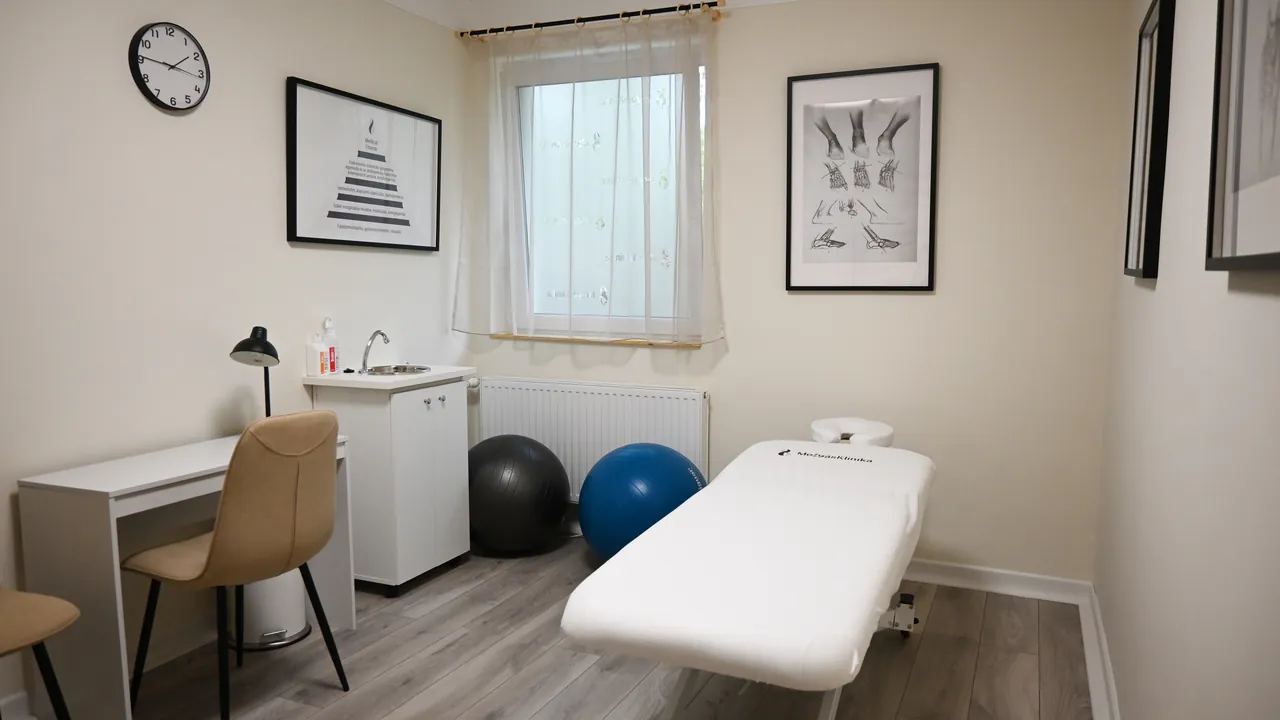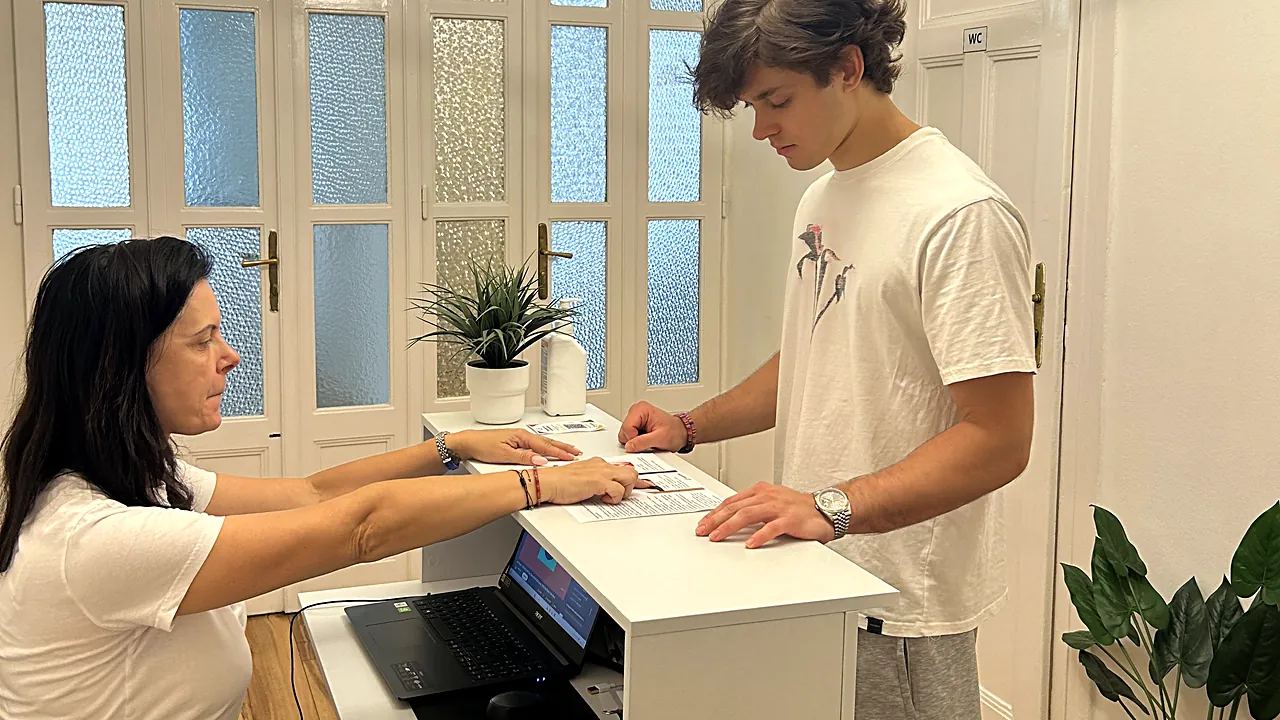
Yes, you can pay for physiotherapy with a SZÉP card, and you can ask for a health fund invoice too. At MozgásKlinika Újlipótváros (1132 Budapest, Váci út 28., opposite Westend) we accept cash, bank cards and SZÉP cards, and we issue invoices you can claim back from your Hungarian health fund (egészségpénztár). Here is what to check before your visit so the paperwork goes smoothly.
Foreign insurance: please read first
We are a private healthcare provider under Hungarian law and issue standard Hungarian invoices only. We can’t fill in forms or certificates for foreign insurers, and we don’t correspond with them directly. Reimbursement is your own responsibility, so check with your insurer before booking whether a Hungarian invoice is enough. If you pay with a foreign card, any currency conversion or card fees are set by your bank.
How can you pay at the Váci út clinic?
Whichever way suits you:
- cash,
- bank card,
- SZÉP card (more on this below),
- health fund invoice – you pay on the day, and your fund reimburses you under its own rules.
Our 12-session passes can also be bought online through Salonic, the booking system we use, or by bank transfer. We’ll give you the transfer details directly. For what a single session or a pass costs, see our price guide for the 13th district.
A quick note on terms: gyógytorna is physiotherapy built around therapeutic exercise, and manuálterápia is hands-on manual therapy. Both can be paid for in the ways listed above.
Physiotherapy with a SZÉP card: what to check
The SZÉP card is a Hungarian employee-benefit card, and it’s split into separate sub-accounts, often called pockets. Not every pocket can be used for every kind of service. Health services are usually paid from the leisure (Szabadidő) pocket; if you’re unsure, ask when you book.
Unsure? Ask when you book. It takes a minute and saves an awkward moment at the desk.
Two small things people tend to miss. Check your balance in your card provider’s app first, because a pass can cost more than what’s sitting in the relevant pocket. And if your balance doesn’t cover the full amount, you can top up the difference by card or cash.
Claiming through a Hungarian health fund
The clinic has agreements with most Hungarian health funds. So your fund will very likely accept our invoice. What it actually reimburses, and how much, is up to your fund, not us. The order that works best:
1. Ask your fund before your first session
Does your plan cover physiotherapy, manual therapy and passes? Do you need a doctor’s referral or any other document? What details must appear on the invoice? Only your fund can answer these, and the answers vary from fund to fund.
2. Tell us before you pay
Let us know you need a health fund invoice, and give us your fund’s name plus whatever details it asks for (usually your member ID). Getting an invoice right the first time is far easier than correcting it afterwards.
3. Submit the invoice yourself
You send the invoice to your fund, through their portal or however they ask. We provide a proper Hungarian invoice; the reimbursement happens between you and your fund.
Once you know what’s covered, the next step is simple: Book a consultation (opens in a new tab).
Passes, cancellations and invoices
Passes cover 12 or 6 sessions and are valid for 3 months. That matches the clinic’s own protocol for the first level of the MozgásPiramis® method, our five-level treatment approach: two sessions a week, twelve in total. Nobody can promise in advance exactly how many sessions you’ll need, though. That depends on your assessment and on how you respond to treatment.
Appointments cancelled less than 24 hours ahead are charged in full, payable at your next visit. Whether your fund will accept that charge is a question for them.
What your first session includes
Your first visit isn’t just an intake form. It goes like this:
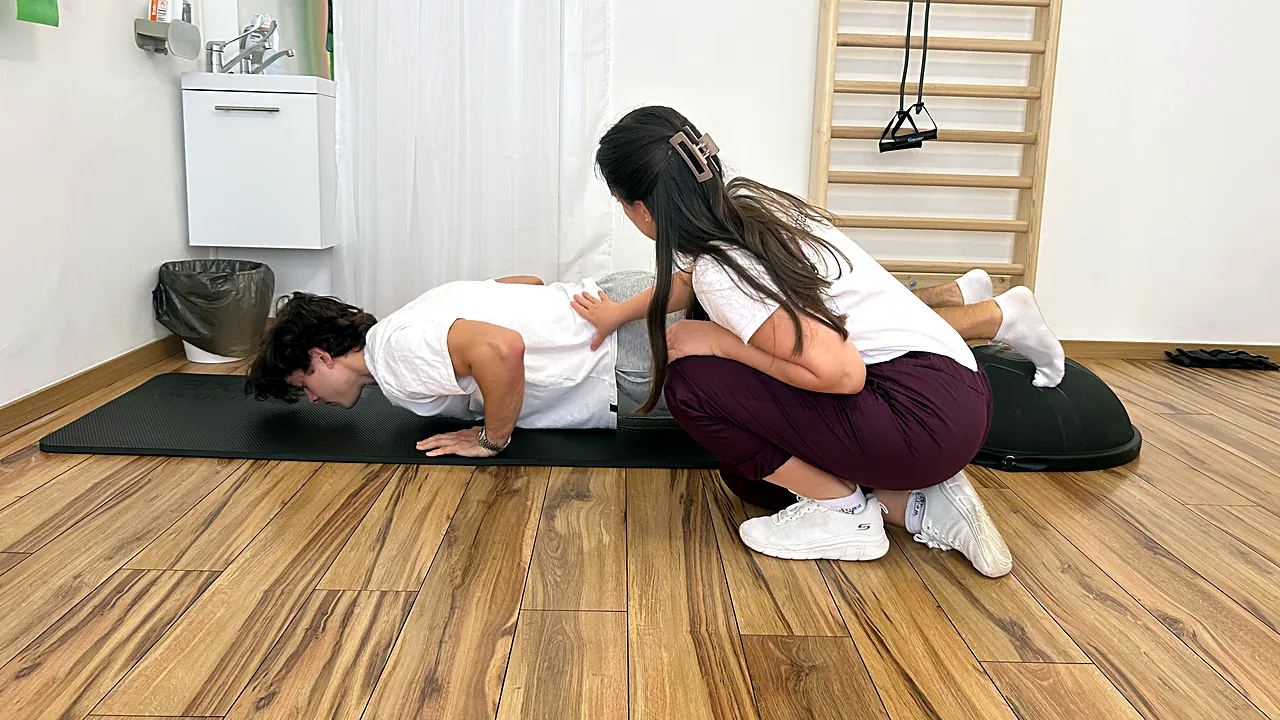
- We map out your problem: questions, a look at any scans or reports you bring, and targeted movement tests.
- We tailor a treatment plan to you, using the MozgásPiramis® to decide where to start.
- We start treatment in that same session, so the first appointment you pay for is already a treatment.
There’s more detail in our guide to the first assessment, and if you’re not sure which approach fits you, read physiotherapy or manual therapy: how to choose. Book a consultation (opens in a new tab) and we’ll sort out payment at the same time.
Working on Váci út? Your benefits may already cover this
Váci út between Lehel tér and Nyugati pályaudvar is lined with offices, and many employers include a SZÉP card or health fund contributions in their benefits package. Those balances often sit untouched for ages, while hours at a desk slowly take their toll on your back and neck.
If your employer offers either, check what you have, then come over at lunch or after work. Driving? Park in the Westend underground car park and cross Váci út; here’s how to find us. You’ll be seen by an experienced physiotherapist or manual therapist.
Want to keep training with a professional after your treatment? Have a look at Medical Fitness, and ask your fund whether it covers that too.
Frequently asked questions
Can I pay for physiotherapy with a SZÉP card in the 13th district?
Yes, our Váci út clinic accepts SZÉP cards. We’ll confirm which pocket you can pay from when you book. It’s worth checking your balance beforehand.
Which health funds do you work with?
Most Hungarian health funds. To check yours, call us on +36 30 790 6270 or ask your fund directly.
Can I claim manual therapy through my health fund?
You’ll get a health fund invoice for manual therapy as well. Whether your fund reimburses it, and on what conditions, depends on its rules, so check with them first.
Can I get an English invoice or a form for my foreign insurer?
No. We issue Hungarian invoices only and can’t complete forms for foreign insurers. Claiming the money back is your responsibility, so confirm with your insurer before you book.
Payment should be the easy part once you’ve finally made time for your back. Check your card, ask your fund, then book a consultation (opens in a new tab).