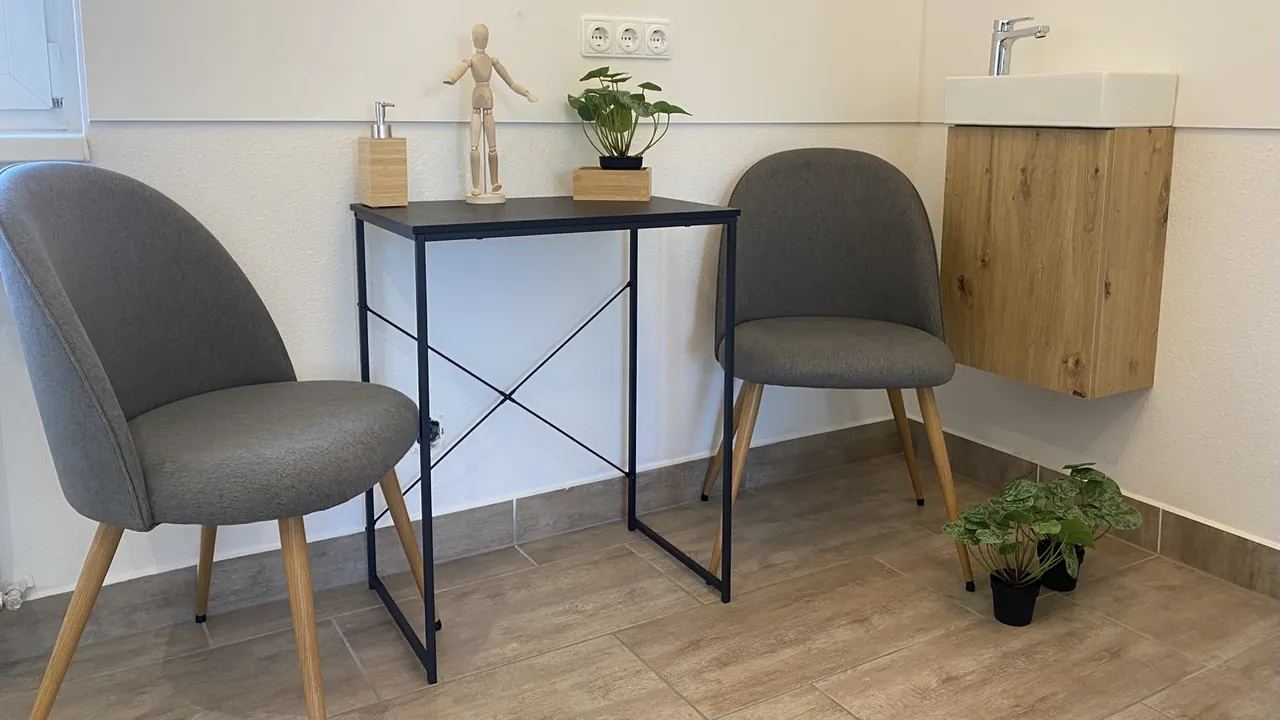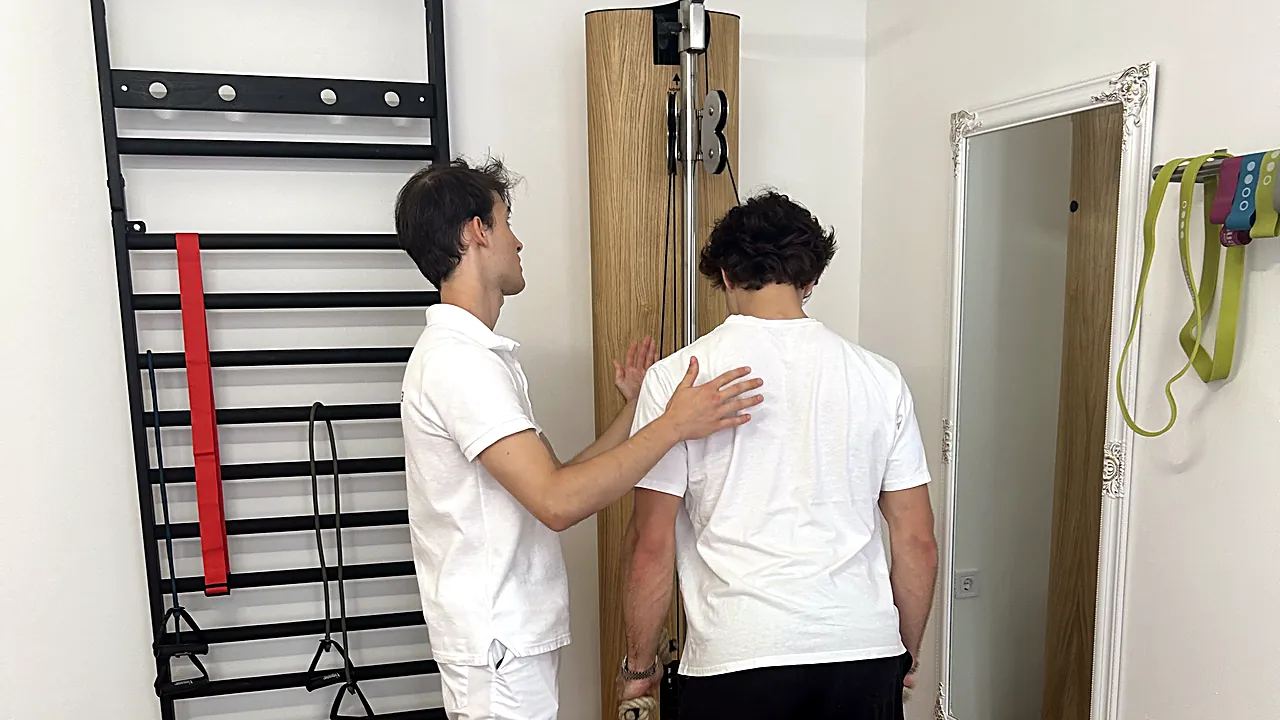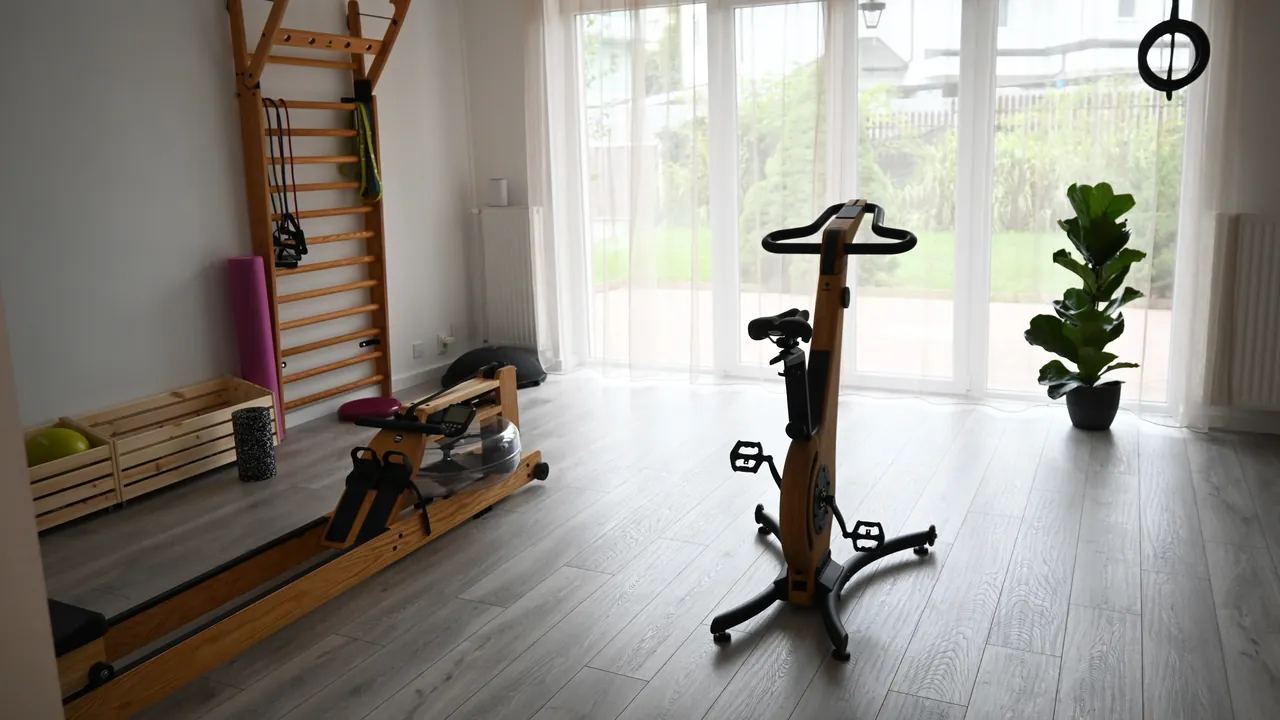
If you’ve finished treatment and want to keep training, but don’t quite trust yourself in an ordinary gym, Medical Fitness in Budapest’s 13th district is built for exactly that: endurance and functional training led by a qualified healthcare professional who knows your injury history. MozgásKlinika Újlipótváros offers it at Váci út 28., opposite Westend, for people who want to keep getting stronger in a safe, clinical setting.
What is Medical Fitness, and where does it sit in the MozgásPiramis®?
Every treatment at MozgásKlinika follows the MozgásPiramis® (Movement Pyramid) method. At the base is pain relief, with manual therapy (manuálterápia) and exercise. Above that come restoring joint range of motion, correcting muscle weakness and building functional stability; the fifth level is the return to sport or full activity. Medical Fitness sits at the top: the maintenance programme that helps you keep and build on what you have achieved.
From the outside it looks a lot like personal training. What’s different is who’s standing next to you: a healthcare professional who knows the story of your injury, working with you in a clinic rather than on a busy gym floor. Sessions are one-to-one, so the whole hour is about your technique.
Why not stop therapy the first week you’re pain-free? Because that’s exactly where most people drop out. The pain eases, life gets busy, and the strength and endurance that could help keep the problem from coming back never get built. Medical Fitness is the maintenance and prevention stage, a way to move on from therapy without being left on your own.
Who is Medical Fitness in the 13th district for?
It’s less about a particular complaint and more about where you are. It tends to suit people in these situations:
- After rehabilitation: you’ve finished physiotherapy (gyógytorna, the Hungarian term for therapeutic exercise) after sports injury rehabilitation or surgery, and want to keep building strength with supervision.
- With recurring back pain: your lower back flares up a few times a year and you’re after regular, targeted spine-protective training. If it hurts right now, read when to see a physio about lower back pain first.
- If you don’t trust yourself in a regular gym: you’re unsure which exercises are right for you, or something has already gone wrong after one bad movement.
- Older neighbours who want to stay active safely, perhaps after treatment for joint pain in later life.
If you work along Váci út, there’s a practical upside too: you don’t have to cross the city to train safely. Office workers between Lehel tér and Nyugati, or residents around Szent István park in Újlipótváros, can drop in before work, at lunch or on the way home, as long as the session times fit their day. (Monday to Friday, 8:00–20:00) The M3 metro stops at both Lehel tér and Nyugati pályaudvar, and trams 4 and 6 stop at Nyugati tér. Driving? Park in the Westend underground car park, cross Váci út, and a few steps later a lift takes you up. Our directions page has the details.
Book a consultation (opens in a new tab)
When should you get checked first?
Assessment first, training second
Medical Fitness isn’t a treatment for fresh problems. If you have strong or worsening pain, numbness or weakness in an arm or leg, pain that wakes you at night, or you’ve had recent surgery, the first step is an assessment, not a workout. With severe pain after an accident, back pain with a fever, or any loss of bladder or bowel control, don’t wait: see a doctor, or go to urgent care.
How is it different from a gym or a personal trainer?
Gyms are great, and a good personal trainer knows a lot about performance. If you’re healthy with no injury history, you’ll probably do very well there.
Medical Fitness is for people whose past matters. Your training is planned by someone with a healthcare background, who can see what happened during your therapy, which movements your body reacted badly to, and when it’s safe to add load. If something flares up along the way, you don’t need to find a new place: you’re in the same clinic where you were treated. Not sure whether you still need therapy or you’re ready to train? It helps to understand the difference between physiotherapy and manual therapy and where an exercise programme fits in.
For many people it’s a sequence. Medical Fitness first. Then, with more confidence, your own training routine.
How do you get started?
If you’ve had therapy with us, your physiotherapist already knows you, so moving on is simple. If you’re new, the first session starts with an assessment, just like every treatment we offer:
- We map out how you move, your history and any previous scans or reports.
- We tailor the plan to you: we work out where you are on the MozgásPiramis® and whether Medical Fitness really is the next step.
- We get to work in that very first session, rather than spending it only talking.
Our article on what happens at your first assessment goes into more detail. At the Újlipótváros clinic Medical Fitness is booked as a 60-minute single session, and there is currently no Medical Fitness pass here; current fees are on our physiotherapy and manual therapy prices page. You can pay by cash, bank card or SZÉP card, and ask for a Hungarian health-fund (egészségpénztár) invoice. Please note that we issue Hungarian invoices only and can’t fill in forms for foreign insurers; claiming reimbursement is the patient’s responsibility.
Book a consultation (opens in a new tab)
You can also book by phone: +36 30 790 6270.
Finishing therapy doesn’t have to mean you stop moving. If the pain has gone and you’d like it to stay that way, the next step can start right here at Váci út 28., with someone who knows where you started from.
Book a consultation (opens in a new tab)
Frequently asked questions
Do I need to have had therapy with you first?
Not necessarily. If you were treated elsewhere or are starting fresh, your first session begins with an assessment, which shows whether Medical Fitness suits you. Bring any previous scans, reports or discharge summaries.
How many sessions will I need?
Nobody can say in advance, and we don’t promise a number. The 12-session pass gives a framework for regular, longer-term work, but how much time you need depends on your assessment and your progress.
What should I bring?
Comfortable sportswear, clean indoor trainers and a bottle of water. Any recent scans or surgical reports too. You can change at the clinic.
Can I come before or after work?
That depends on the current session times. You can see free slots on the booking page or arrange a time by phone. (Monday to Friday, 8:00–20:00)