It’s worth seeing a physiotherapist when pain or stiffness keeps coming back, doesn’t settle on its own, or when you want to get back to normal movement safely after an injury or an operation. If you’re looking for a physiotherapist in Budapest’s 13th district (XIII. kerület), MozgásKlinika Újlipótváros is at Váci út 28., opposite Westend, offering physiotherapy and manual therapy within easy reach of Újlipótváros, Angyalföld and the offices along Váci út.
A quick note on terms: in Hungary, physiotherapy is usually called gyógytorna (literally “healing exercise”) and the therapist a gyógytornász. Manual therapy is manuálterápia. You’ll see these words on signs and booking pages.
What does a physiotherapist actually do?
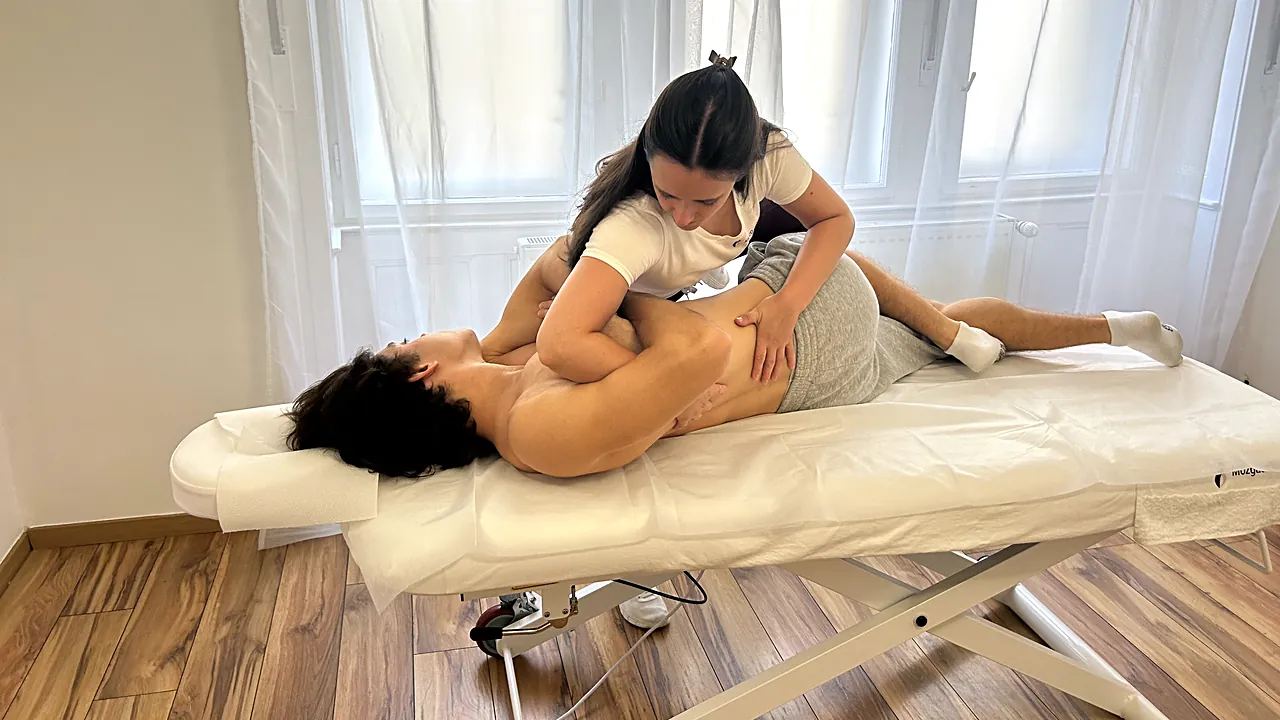
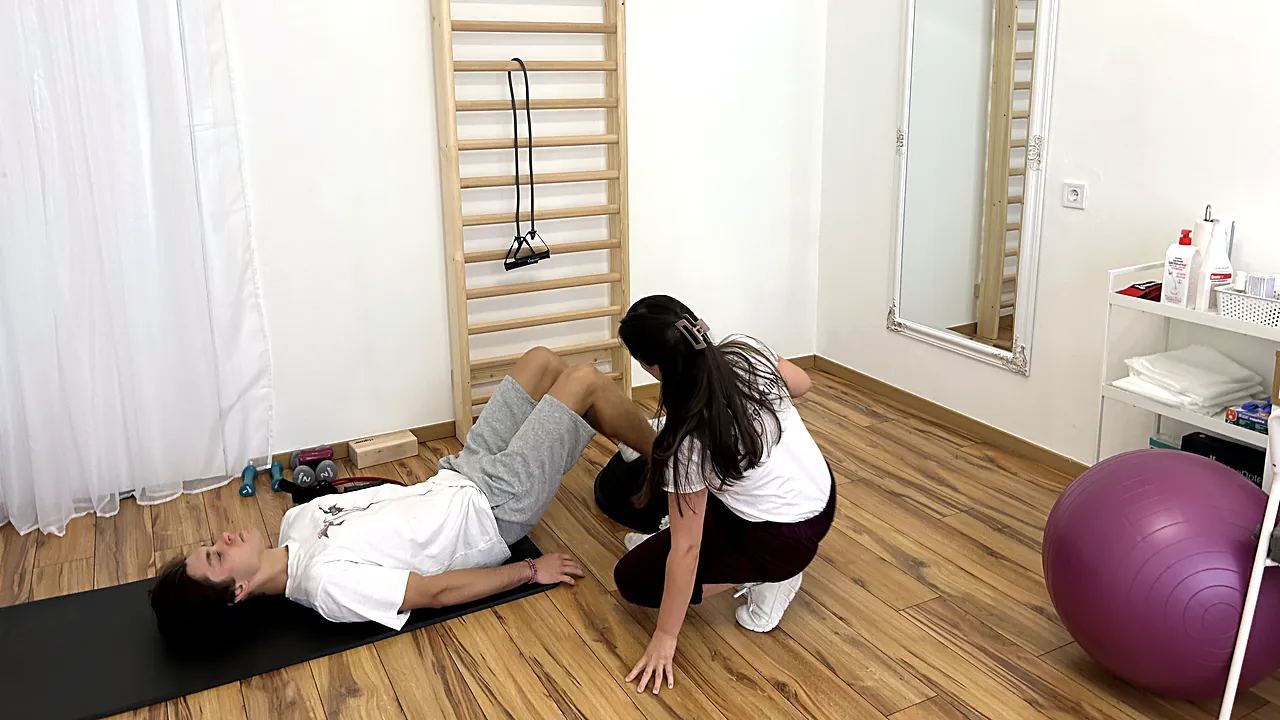
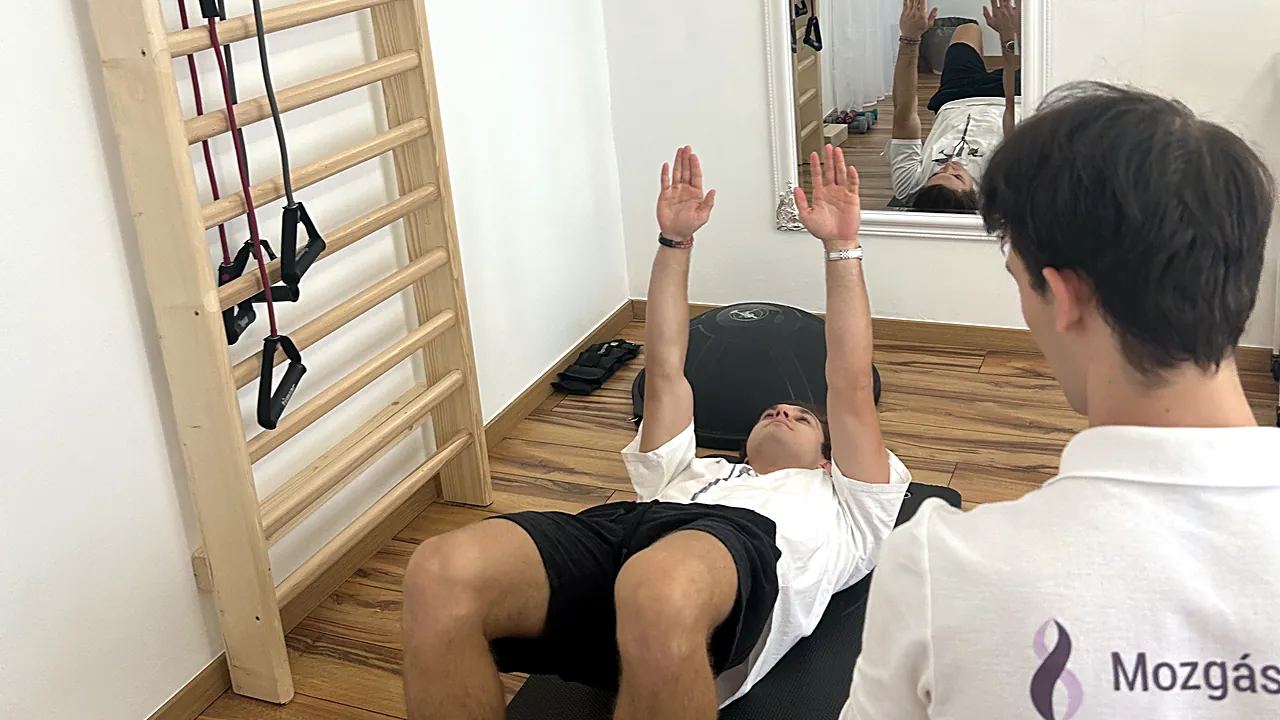
A physiotherapist is a healthcare professional who works with problems of the muscles, joints and spine. The work starts with an assessment: where the pain comes from, which movements set it off, and where your body is stiff or weak. Treatment is built on that – targeted exercises chosen for you, which at our clinic are often combined with hands-on techniques for joints, muscles and connective tissue (manual therapy).
Not sure which of the two you need? We’ve compared physiotherapy and manual therapy here.
A physiotherapist doesn’t prescribe medication and isn’t a substitute for a medical examination. If something behind your symptoms needs a doctor, they’ll tell you and refer you on.
When is it worth seeing a physiotherapist in the 13th district?
These are the situations that bring people to us most often.
Back pain that keeps coming back
It flares up after a long day at the desk, a house move, one awkward lift. Then it fades. Then it’s back. When pain returns on a regular cycle, whatever causes it probably hasn’t been dealt with – it has just gone quiet. Painkillers get you through the bad days but don’t touch the reason it keeps returning. More on this in our article on lower back pain in the 13th district.
Neck and shoulder pain from office work
Plenty of people in the Váci út office blocks know the pattern: a stiff neck by mid-afternoon, a pull between the shoulder blades, head creeping ever closer to the screen. Long hours at a monitor tend to produce exactly this. Our piece on desk-related neck pain covers it, and if the pain spreads into the shoulder joint or arm, read our article on shoulder pain.
After an injury or surgery
After a sprained ankle, a knee injury or orthopaedic surgery, physiotherapy helps rebuild range of movement, strength and stability. After an operation we start in line with your surgeon’s instructions. One of the most common knee injuries has its own article: meniscus injury and physiotherapy.
Posture problems
Rounded shoulders, an increasing curve in the upper back (hyperkyphosis), always loading one side. These build up over years and often don’t hurt for a long time, which makes them easy to put off. A physiotherapist checks which muscles have tightened and which have weakened, then puts together a routine you can realistically fit into your day at home.
Sports overload
Runners on Margitsziget (Margaret Island), tennis players and gym-goers often come to us not with a single injury but with overload: a tendon that hurts a bit more after every session, a knee that aches towards the end of longer runs. We look at what, and how much, you can keep doing, so that ideally you don’t have to stop altogether.
If one of these sounds familiar, book a consultation (opens in a new tab) and we’ll assess what might be behind it at the first visit.
When should you see a doctor first?
Red flags
With any of the following, don’t wait for a physiotherapy appointment – see a doctor or go to A&E straight away:
- numbness around the groin and inner thighs, or problems controlling your bladder or bowels
- weakness in an arm or leg that is getting worse quickly
- pain after a serious fall or accident
- back pain with fever, feeling generally unwell, or unexplained weight loss
- pain at night that doesn’t ease with rest
- chest pain spreading into the arm or jaw
If you’re unsure, call your GP (háziorvos) first.
What to look for in a physiotherapist near you
A good physiotherapist starts with an assessment, not a pre-printed exercise sheet. They explain what they found and why they’re recommending what they recommend. They give you work to do at home, because one or two sessions a week are rarely enough on their own. And they’re honest about numbers: nobody can guarantee in advance how many sessions you’ll need, because that depends on how you respond.
There’s one factor people underestimate, and in a busy district like this it matters as much as credentials: whether you can actually keep getting there, week after week, tired, after work, since the first level of our MozgásPiramis® method runs at two sessions a week and nobody sticks with a plan that costs them half a day each time. The clinic is on Váci út between Lehel tér and Nyugati, opposite Westend. The M3 metro stops at Lehel tér and Nyugati pályaudvar are nearby, as are trams 4 and 6 at Nyugati tér (about 2–3 minutes on foot from the Lehel tér metro exit, about 8 from Nyugati pályaudvar). From Angyalföld the M3 brings you here without changing; from Újlipótváros it’s an easy trip from the Pozsonyi út and Szent István park side. By car, you can park in the Westend underground car park and cross Váci út. Step-by-step directions are here. (Monday to Friday, 8:00–20:00)
Do I need a referral?
No – at a private clinic you don’t need a referral and can book directly. If you have recent medical reports, a hospital discharge summary or an MRI report, bring them and we’ll go through them at your first consultation. You can pay by cash, card or SZÉP card, and health-fund (egészségpénztár) invoices are available.
If you have foreign or international insurance, please note: we issue Hungarian invoices only, can’t fill in forms for foreign insurers, and claiming reimbursement is your responsibility. Current prices are on our physiotherapy and manual therapy prices page.
What happens at your first visit?
- We map out the problem: questions, a look at your reports, and movement tests to find where the pain comes from.
- We tailor a treatment plan to you, based on the MozgásPiramis® method and fitted around your goals and routine.
- We start treatment in that same first session – the assessment isn’t a separate “empty” appointment.
For a fuller picture, see what to expect at your first assessment.
If you’d like us to look at your case, book a consultation (opens in a new tab).
Frequently asked questions
What’s the difference between a physiotherapist and a manual therapist?
A physiotherapist works mainly through movement and targeted exercise; manual therapy means hands-on treatment techniques. Most treatment plans at our clinic combine the two, depending on what the assessment shows.
How many sessions will I need?
There’s no honest way to say in advance. The first level of the MozgásPiramis® protocol is 12 sessions, twice a week, but how many you actually need depends on your assessment and how you respond to treatment.
Where can I park if I come by car?
The Westend underground car park is the easiest option: cross Váci út, a few steps, then take the lift up to the mezzanine (félemelet).
Do you treat patients in English?
Yes, English is spoken at the clinic. If English matters to you, mention it when you book so we can confirm before your first visit.
A pain that comes back a third time isn’t bad luck any more – it’s a pattern, and patterns can be worked on. Book a consultation (opens in a new tab) or call us on +36 30 790 6270.