Spine-friendly sleep comes down to one idea: at night your spine should rest close to its natural, neutral line, with the pillow supporting your neck and the mattress supporting your lower back, rather than either of them twisting you for hours. The physiotherapists at MozgásKlinika Újlipótváros, on Váci út opposite Westend in Budapest’s 13th district (XIII. kerület), regularly see people whose morning back pain or stiff neck seems to start somewhere in bed. Here’s what’s worth checking at home, and when it makes more sense to get it looked at.
Stiff or sore? What morning back pain is telling you
Not every bad morning is the same. Plenty of people wake up a bit stiff, and it eases off in the shower, over breakfast or on the walk to Lehel tér. That often just means your spine and the muscles around it held one position for a long time and need a few minutes to warm up.
It’s different if you wake up in pain, if it doesn’t settle during the day, or if it spreads into your buttock, leg or arm. Then your sleeping position is at most making things worse; it probably isn’t the cause. We go into longer-lasting back problems in our article on lower back pain in the 13th district.
The short version: stiffness improves with movement; pain often doesn’t.
What’s the best sleeping position for back pain?
There isn’t one perfect position. If your back hurts, you’ll usually get further by adjusting the way you already sleep than by forcing yourself into something completely new overnight.
On your back
Back sleeping suits a lot of spines, as long as your lower back isn’t arched too much. A small pillow or a folded blanket under your knees can help the lower back relax. You’ll want a flatter pillow under your head than you would on your side, or your chin ends up tipped towards your chest.
On your side
Probably the most common position, and a fairly spine-friendly one. Two things matter. Your pillow should fill the gap between your shoulder and your head so your neck stays in line with the rest of your spine; and a pillow between your knees stops your top leg dragging your pelvis forwards and down. If you always end up on the same side because the bed is pushed against the wall – a familiar setup in the smaller bedrooms of older Újlipótváros apartment blocks – try switching sides now and then.
On your stomach
The trickiest one. Your head stays turned to one side for hours, holding your neck in sustained rotation, and your lower back tends to sag. If you can’t give it up, a very flat pillow (or none) plus a thin pillow under your hips may take some of the load off. And if your neck is stiff most mornings, stomach sleeping is a prime suspect. For the daytime side of that story, see our piece on office neck pain along Váci út.
Pillows and mattresses: what to look for (no brands needed)
We don’t recommend brands or firmness ratings, because the right choice depends on your build, how you sleep and what’s bothering you. A few principles work for almost everyone, though.
Pillow height should match your position: higher for side sleeping, medium on your back, as flat as possible on your stomach. If your shoulder goes numb or one side of your neck feels tight in the morning, your pillow may be too high or too low.
With a mattress, the aim is that your spine stays roughly straight when you lie on your side – hips not sinking in, shoulder not pushed up. Too soft and too hard can both cause trouble, and no pillow will rescue an old mattress that sags in the middle.
Small changes to try tonight
You don’t need a new bedroom. Start with one or two of these and see what changes:
- A pillow between your knees (side) or under them (back).
- Check that your pillow actually fills the space between shoulder and head.
- Skip the half-sitting, head-forward phone scroll in bed – your neck gets enough of that at work.
- Don’t spring out of bed: roll onto your side and push yourself up to sitting with your arms.
- Move around for a few minutes before you rush for the metro.
Nights and days are connected. If you board the M3 with a stiff back and then spend eight hours hunched over a screen in a Váci út office, sleep and sitting pile onto the same load, and it gets harder to shake off. If your chair and monitor look suspect too, go through our office ergonomics guide; fixing both together usually works better.
If a few weeks of tweaks haven’t helped your morning pain, it’s worth finding out what’s behind it. Book a consultation (opens in a new tab)
When should morning pain be checked by a professional?
Don't wait if…
See a doctor promptly if:
- you have night pain that doesn’t change however you move, or is worse lying down than when you’re active;
- the pain comes with fever, unexplained weight loss or feeling generally unwell;
- you notice numbness or weakness in a leg or arm, or it’s getting worse;
- your bladder or bowel control changes, or you lose feeling around the groin/saddle area – this is an emergency;
- the pain started after a fall or accident.
How we help at our Váci út clinic
Sleep tips work best once you know what’s actually causing the problem. Our first visit works like this:
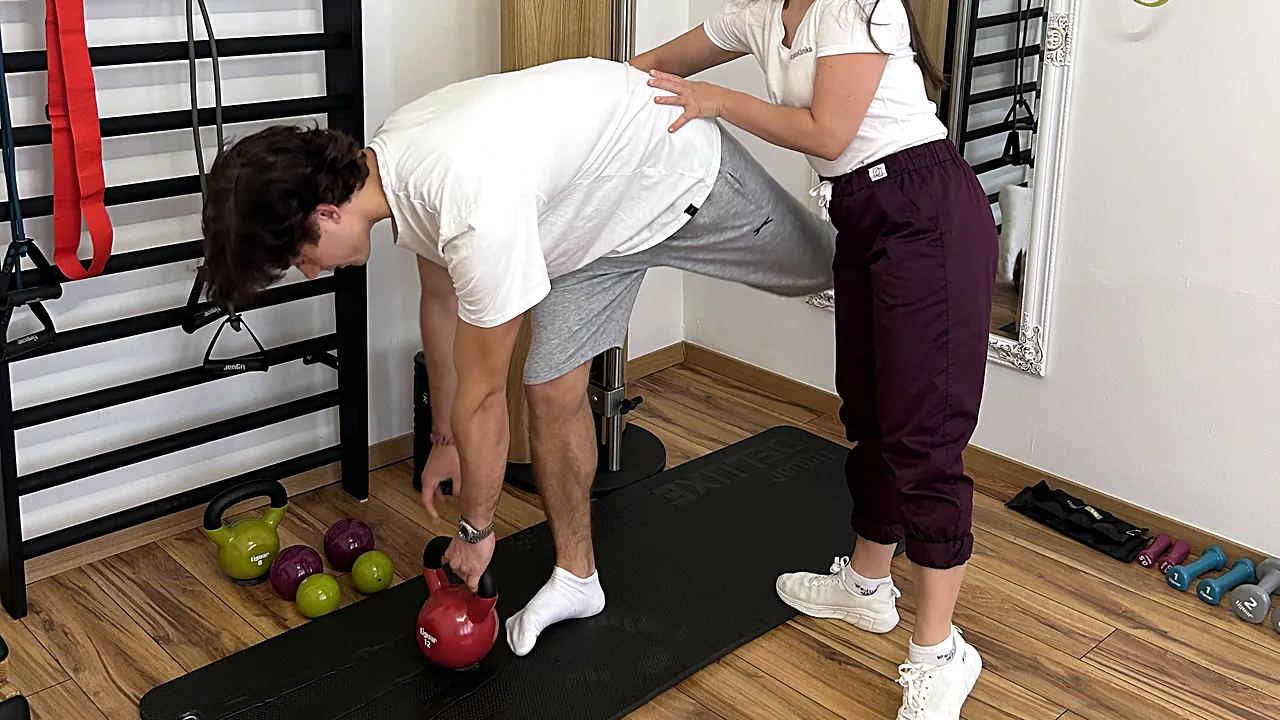
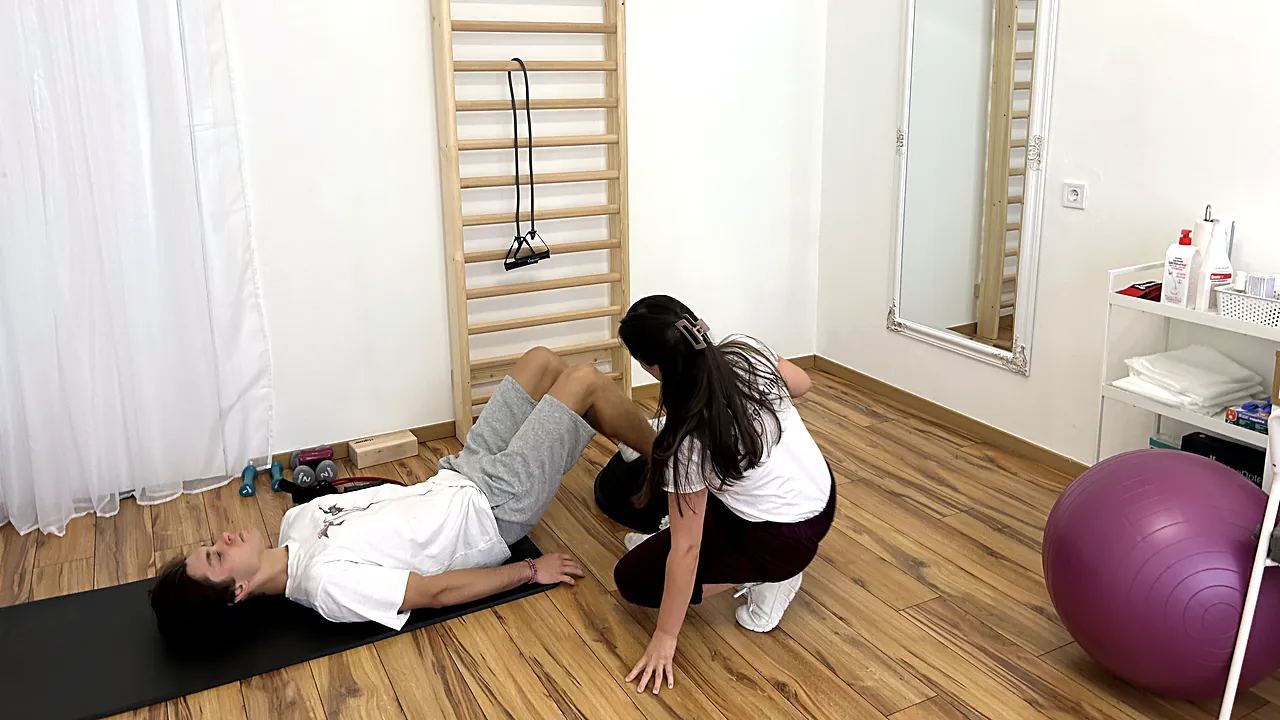
- We map out the problem – how you sleep, when it hurts, what eases it, followed by a structured assessment based on our MozgásPiramis® (Movement Pyramid) method.
- We tailor a treatment plan to you – gyógytorna (physiotherapy and therapeutic exercise), manuálterápia (manual therapy) or a mix, fitted around your symptoms and your day.
- We start treatment on the first visit – the assessment isn’t a separate chat; treatment begins in the same session.
You can read what happens in that first hour in our guide to the first assessment, and more about the team on our 13th district physiotherapists page. We won’t promise a set number of sessions in advance: that depends on how you respond to treatment.
If you’d like a physiotherapist in Újlipótváros to work out what’s behind your morning pain, book a consultation (opens in a new tab) or call us on +36 30 790 6270.
Frequently asked questions
Does my sleeping position really matter if I have back pain?
It can. Your position is rarely the only reason your back hurts, but you hold it for hours, so it can make things better or worse. Small changes, like a pillow between or under your knees, make a noticeable difference for many people.
Should I buy a new mattress if my lower back hurts in the morning?
Not necessarily as step one. If your mattress visibly sags, or you sleep better in other beds (on holiday, say), it may be part of the problem. Sort out your pillow and position first, and if the pain hangs around, get it assessed.
Where is the clinic and how do I get there?
MozgásKlinika Újlipótváros is at Váci út 28 (mezzanine, no. 2), opposite Westend, between Lehel tér and Nyugati pályaudvar. It’s easy to reach on the M3 metro or trams 4 and 6, and if you drive you can park in the Westend underground car park and cross Váci út. Step-by-step directions are in our how to find us guide.
When should I worry about morning lower back pain?
If it hurts at night in a way no change of position helps, or it comes with fever, weight loss, numbness or weakness, don’t wait – see a doctor. If it’s stubborn, recurring morning pain without those signs, a physiotherapy assessment can help find the cause.
Your bed is where you spend hours every night barely moving, so it’s worth giving it a few evenings of attention. And if a better pillow and a cushion between your knees don’t make the difference, the next step isn’t a pricier mattress – it’s a proper assessment. Book a consultation (opens in a new tab)