If the first few steps out of bed feel like stepping on a stone, or your heel is throbbing after a long day on your feet, it is worth finding out what is overloading it. At MozgásKlinika Újlipótváros, on Váci út 28 opposite Westend in Budapest’s 13th district (XIII. kerület), we treat heel spurs and heel pain with physiotherapy (in Hungarian, gyógytorna: therapeutic exercise) and manual therapy (manuálterápia): we assess where the pain is coming from and start treatment in the very same visit.
What does heel spur pain feel like?
A heel spur (calcaneal spur) is a small bony outgrowth on the underside of the heel bone. Many people first see one on an X-ray and picture a sharp spike digging in with every step. Reality is usually less dramatic. The pain often comes not from the spur itself but from the strong band of tissue under the sole that attaches to the heel, the plantar fascia, becoming irritated and overloaded.
The typical pattern:
- sharp, stabbing pain under the inner part of the heel, especially with the first steps in the morning or after sitting for a while
- it eases after a few minutes of walking, then returns towards the end of a long day standing
- tenderness when you press on the bottom of the heel
- worse barefoot on hard floors
Heel pain can have other causes too, such as the Achilles tendon or an irritated nerve, so “it must be a spur” is not a diagnosis on its own.
What overloads the heel?
Rarely one single thing. Usually the load your foot takes has quietly outgrown what it can handle.
Long hours standing or walking on hard surfaces
Retail staff in the Westend shops, baristas, receptionists: anyone on their feet all shift loads the same spot for hours, often on tiles or concrete. The same goes for people who walk everywhere. City pavement does not give.
Running, especially a sudden jump in mileage
The running track on Margitsziget (Margaret Island) is a great place to train, but a sudden increase in distance or a switch to new shoes can leave your feet behind. Our article on runner’s knee for Margitsziget runners covers building up load sensibly.
Footwear
Worn-out trainers, completely flat shoes, flip-flops all summer. None of them looks dangerous on its own, but the plantar fascia feels the difference over thousands of steps a day.
Flat feet and how the foot is loaded
Flat feet (pes planus) change how load spreads across the sole and can add to heel overload, often alongside tight calves. A proper assessment also looks at how your ankle, knee and hip move, because they all affect what reaches your heel.
If this sounds familiar, there is no need to wait it out for months. Book a consultation (opens in a new tab) and we will look at what is behind yours.
When to see a doctor first
Most heel pain is musculoskeletal, but in these cases see your GP or an orthopaedic specialist before starting physiotherapy, or urgent care if it is serious:
- the heel is swollen, red, warm to the touch, or you have a fever
- the pain started after a fall, jump or accident and you cannot put weight on it
- you feel numbness, tingling or burning in the sole
- the pain is severe at rest or at night
- you have diabetes and notice a wound or discolouration on your foot
- the pain does not ease despite rest
Heel spur treatment in Újlipótváros: what physiotherapy and manual therapy offer
The aim is not just to dull the pain. We want to understand why your heel in particular is being overloaded, and treat that. MozgásKlinika’s MozgásPiramis® (Movement Pyramid) method moves step by step from pain relief through mobility and stability to strength and endurance.
Physiotherapy (gyógytorna)
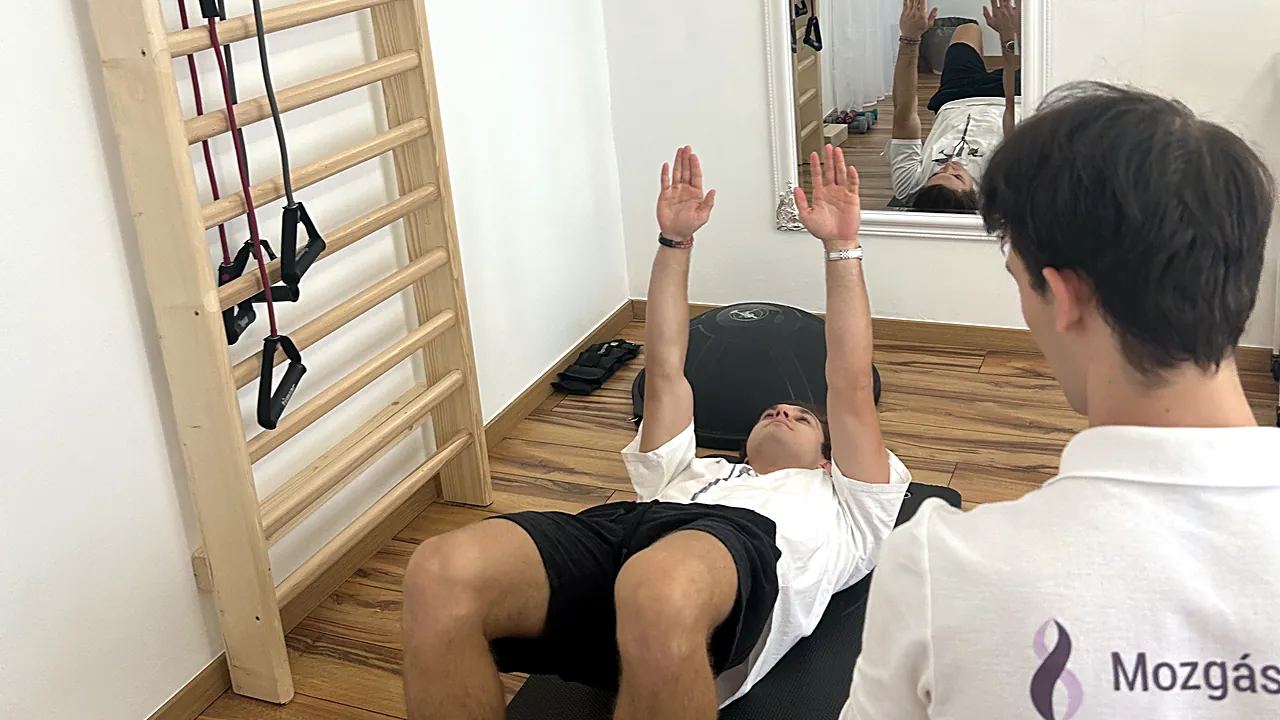
This means targeted exercises chosen for you. For heel pain it typically involves improving calf and plantar fascia flexibility, strengthening the small muscles of the foot and gradually rebuilding tolerance to load. Which of these matters in your case is decided by a physiotherapist in the 13th district after assessing you, not by a list from the internet.
Manual therapy (manuálterápia)
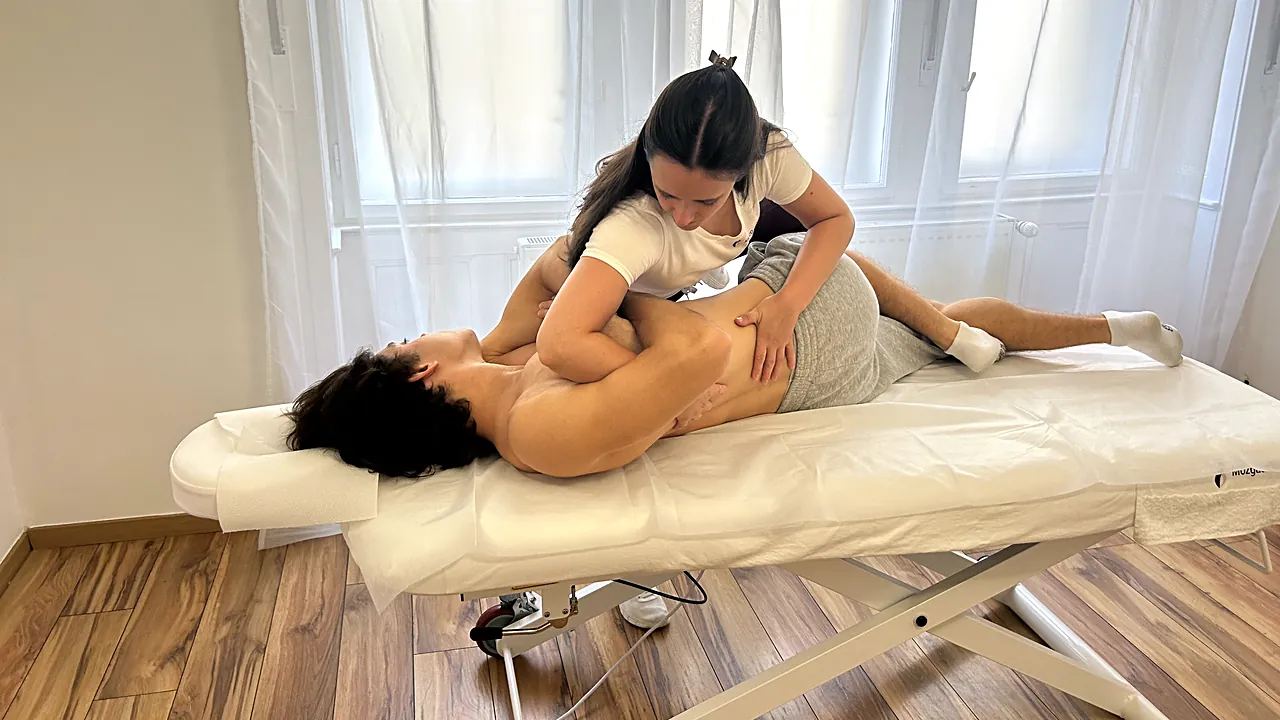
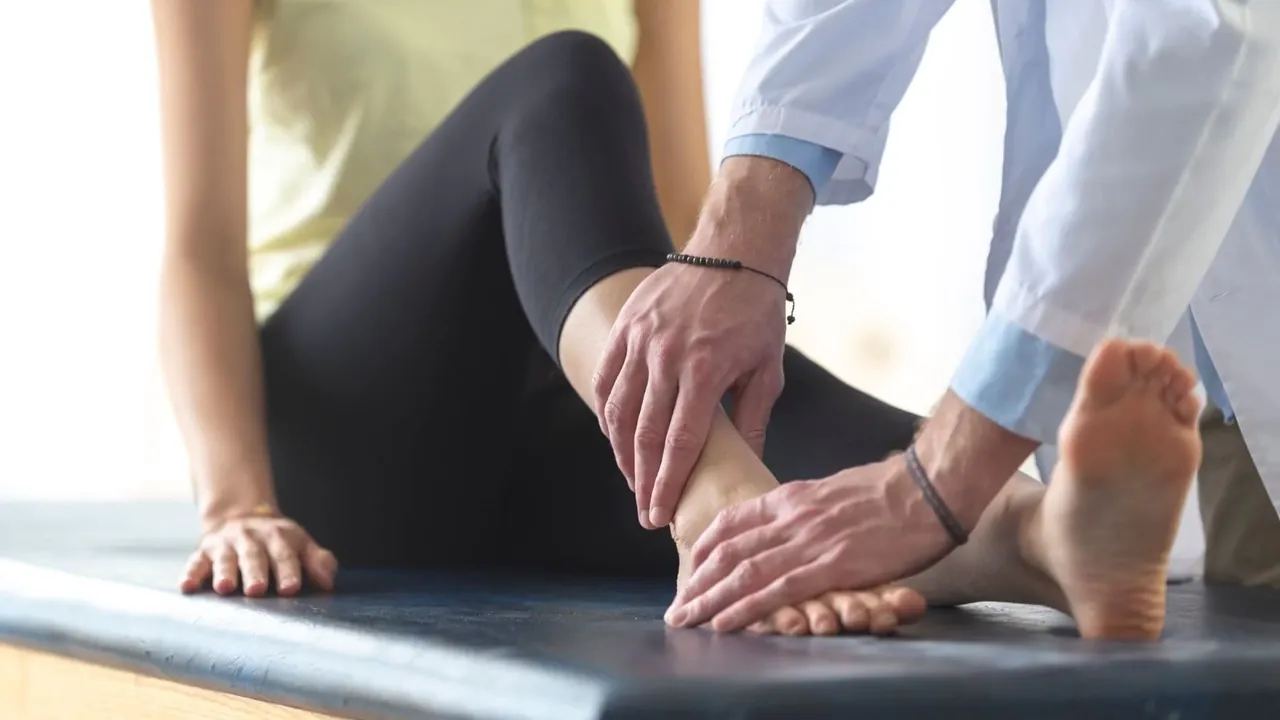
Here the therapist works with their hands: soft-tissue techniques can ease tightness in the calf and sole, and stiff ankle and foot joints can be mobilised. You can read more about how manual therapy works at our clinic.
Supporting treatments
In MozgásKlinika’s protocol the first phase of treatment is often supported by physical therapy tools such as shockwave, ultrasound or kinesiology taping.
How we work
- We map out your complaint: we ask questions, watch you walk, check your foot and calf, and review any previous scans or reports.
- We tailor a treatment plan to you, based on your job, your sport and your daily load.
- We start treatment at the very first visit, rather than using it only for assessment.
Our article on your first assessment visit explains what to expect. When you are ready, book a consultation (opens in a new tab).
What can you do in the meantime?
There is no quick fix, but a few things are in your hands now. Check your shoes: if the soles are worn down or completely flat, a more supportive, cushioned pair is worth a try, and it helps not to pad around barefoot on hard floors at home.
Think about load, too. If you run, you do not necessarily have to stop, but cut back temporarily on whatever provokes the pain and do not run through sharp pain. If you stand all day, sit down on your breaks and change position as much as your job allows.
One thing to avoid: trying a string of exercises from videos before anyone has checked whether it really is a heel spur.
Who we help in the neighbourhood
The clinic sits where Újlipótváros meets Váci út, which matters when every step hurts. If you clock up your kilometres on Pozsonyi út, in Szent István park or walking the dog, you do not have to cross the city for treatment. If you work at Westend, you only need to cross Váci út, even straight after a shift. Margitsziget runners are not far away either, and our piece on sports injury rehabilitation may help if an injury is involved. For older neighbours, heel pain often comes alongside other joint complaints; we cover this in our article on joint pain in later life.
The M3 metro stops Lehel tér and Nyugati pályaudvar are close by, as are trams 4 and 6. If you drive, you can park in the Westend underground car park and walk across Váci út; at the clinic, a few steps lead to a lift, which is a real help with a sore heel. It’s only a 2–3 minute walk from both the Lehel tér metro exit and Westend. Step-by-step directions are on our how to find us page.
Heel pain can be stubborn, and the longer you limp around it, the more other muscles and joints learn the wrong pattern. Call us on +36 30 790 6270, or book a consultation (opens in a new tab) online.
Frequently asked questions
Should I bring my previous scans or reports?
Yes. If you have an X-ray, ultrasound or MRI report, bring it along. Reviewing previous findings is part of the initial consultation, so the therapist sees the full picture.
Do I have to stop running because of a heel spur?
Not necessarily. Often it is enough to reduce distance and intensity for a while, but we decide that after assessing your specific case.
How many sessions will I need?
Nobody can promise a number in advance, because recovery differs from person to person. MozgásKlinika’s protocol sets the first phase at 12 sessions, twice a week, but the actual number depends on your condition and your progress.
How can I pay, and will my insurance cover it?
Across the MozgásKlinika network you can pay by cash, bank card or SZÉP card, and ask for an invoice for a Hungarian health fund; see our article on health funds and the SZÉP card. Please note: we issue Hungarian invoices only, cannot fill in forms for foreign insurers, and any reimbursement is your own responsibility.