If you’ve been hurt running, cycling, playing a ball game or training outdoors, sports injury rehab in the 13th district (XIII. kerület) starts with a proper assessment and continues with targeted, step-by-step exercise therapy – not with weeks of waiting to see if it sorts itself out. MozgásKlinika Újlipótváros, at Váci út 28 opposite Westend and a short distance from Margitsziget (Margaret Island), helps you get back to the sport you enjoy.
This is for people who run laps of the island, cycle along the Danube, or play football, basketball or tennis at the weekend. If your knee simply aches from running, with no specific injury, read our article on runner’s knee near Margitsziget instead.
Which sports injuries are worth seeing a physiotherapist for?
Most sports injuries fall into a handful of familiar types. These are the ones we see most.
Ankle sprains
A bad step off a kerb, landing on someone’s foot. The sprained ankle is one of the most common sports injuries, and plenty of people shrug it off. Physiotherapy after an ankle ligament injury aims to make the ankle stable again, so it doesn’t roll at your next session.
Achilles tendon
Achilles problems often build slowly: morning stiffness, pain on the first steps of a run. A sudden, sharp pain above the heel is a different matter – see the warning signs below.
Knee: ACL and meniscus, including after surgery
Some knee injuries need an operation, and the real work begins afterwards. After ACL (anterior cruciate ligament) or meniscus surgery, physiotherapy follows your surgeon’s limits. See also physiotherapy after a meniscus injury.
Shoulder and elbow
Tennis, swimming and the gym all load the shoulder and elbow. See our articles on shoulder pain treatment near Westend and tennis elbow in the 13th district.
First steps after an injury – and when to see a doctor first
First: stop. Playing on through a fresh injury turns a small problem into a bigger one. In the first few days, protect the injured area, keep load within what pain allows, and calm any swelling.
When not to start with a physiotherapist
See a doctor or go to A&E (sürgősségi ellátás) if:
- you can’t put weight on the injured leg, or can’t use your arm,
- a limb or joint looks deformed or dislocated,
- you heard a pop when it happened and the joint swelled up quickly,
- you felt a sudden sharp pain above the heel, as if you’d been kicked,
- you have numbness, loss of feeling, or cold, discoloured skin below the injury,
- after a knock to the head you feel dizzy, sick or confused,
- the area is hot and red and you have a fever.
Get a medical examination first (possibly with imaging); rehab starts afterwards, with the findings in hand.
If none of these apply but the pain hasn’t eased after a few days, or you’re unsure how much you can load it, book a consultation (opens in a new tab). If you already have a report or MRI, bring it along.
Why waiting it out isn’t enough
Pain usually settles well before the injured area gets its strength and stability back. That’s exactly when many people head back onto the pitch. Across the MozgásKlinika network, patients most often drop out of treatment when the acute pain eases – which raises the risk of re-injury.
While you rest, muscles weaken, the joint stiffens and your balance gets worse. Structured rehab reverses that, step by step. It’s the difference between “it doesn’t hurt any more” and “it can handle the work again”.
Sports injury rehab in the 13th district: how it works
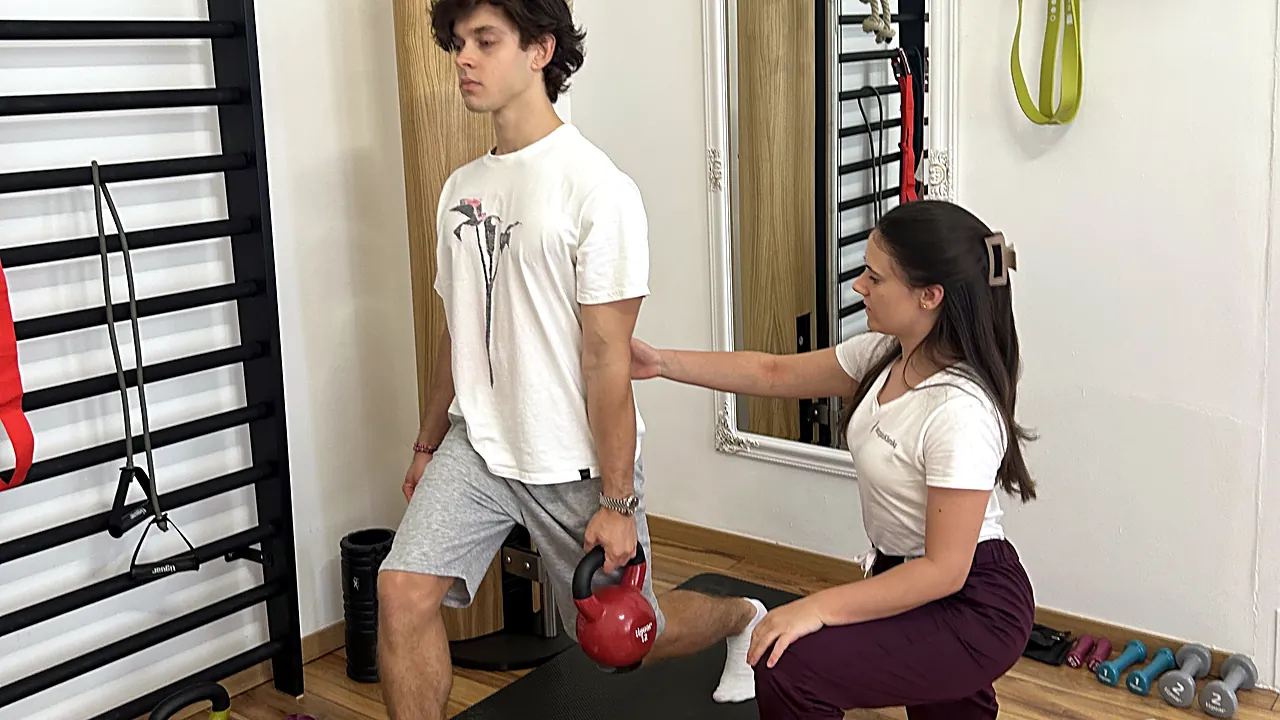
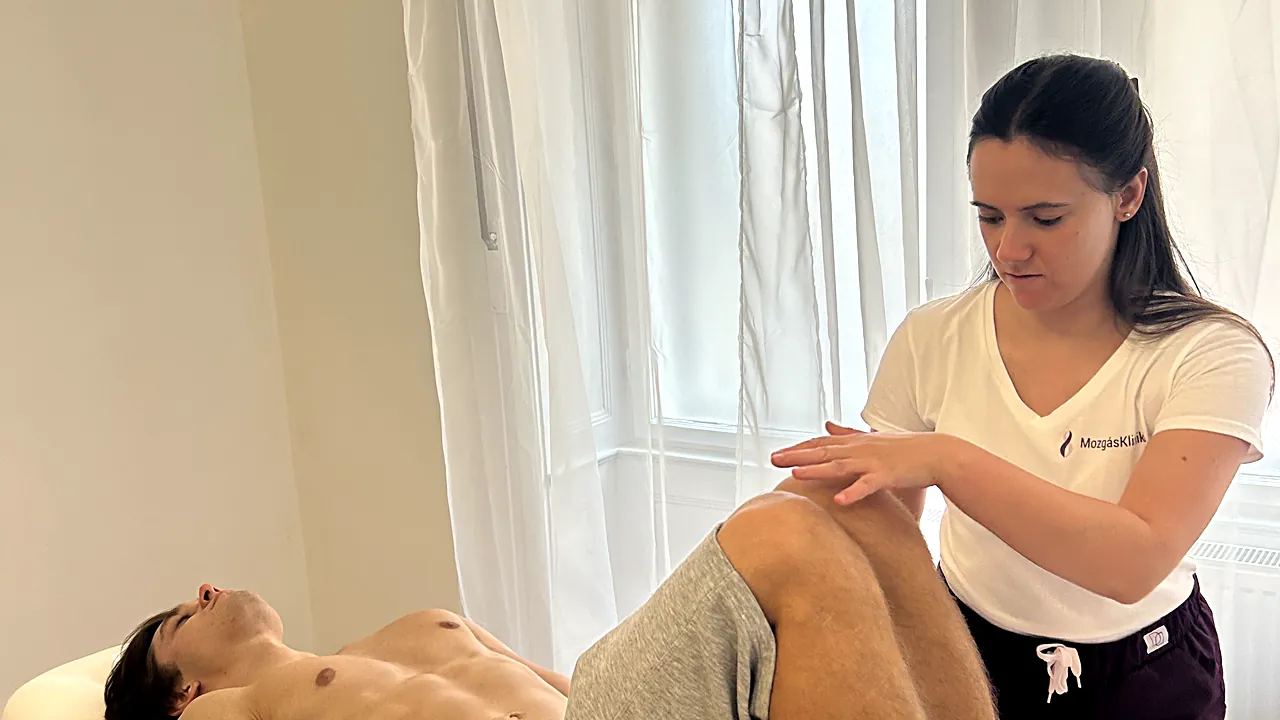
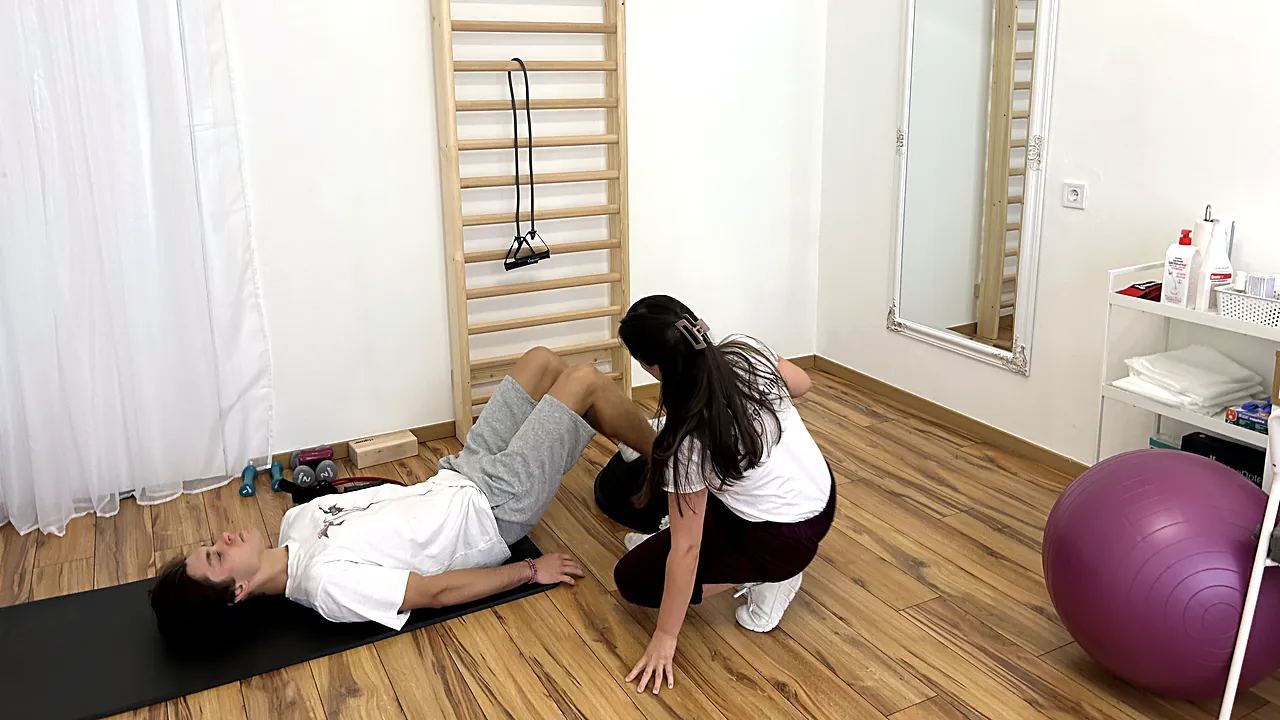
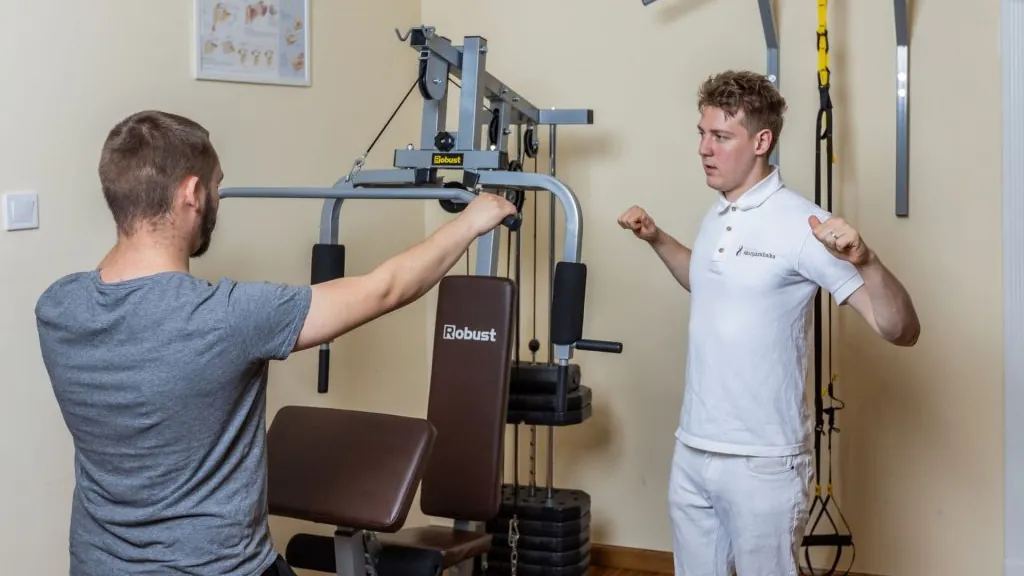
Treatment is built around sport-specific physiotherapy – gyógytorna in Hungarian, physiotherapy based on therapeutic exercise – with manuálterápia (manual therapy, hands-on treatment of joints and soft tissue) added where it helps. Our MozgásPiramis® (Movement Pyramid) method fits an athlete’s path back: pain relief first, then joint range of motion, strength and functional stability, and finally the return to the load and movements your sport demands. That looks different for a runner than for a basketball player who has to jump and change direction.
How we work
- We map it out – how the injury happened, what you play, and movement tests to see where the injured area is now.
- We build a plan around you – fitted to your sport, your training rhythm and any medical reports.
- We start on the first visit – treatment begins in the same session as your assessment.
Our article on what happens at your first assessment goes into more detail.
At the method’s first level, the network’s protocol is 12 sessions, twice a week, but nobody can guarantee in advance how many you’ll need. At the Újlipótváros clinic sport-specific exercise is part of physiotherapy (gyógytorna); there is no separate Sports Rehabilitation pass here, but you can choose a Spine Memo or Spine Therapy pass. Current fees are on our physiotherapy and manual therapy prices page. Please note: we issue Hungarian invoices only, can’t fill in forms for foreign insurers, and any insurance reimbursement is your own responsibility.
The clinic is on Váci út, between Lehel tér and Nyugati pályaudvar: park in the Westend underground car park and cross the road, or take the M3 metro or trams 4 and 6 – handy if you’re on crutches. It’s about 25–30 minutes on foot from Margitsziget and about 11 minutes from Szent István park. (Monday to Friday, 8:00–20:00)
Book a consultation (opens in a new tab) – or call +36 30 790 6270.
Back to sport: a goal, not a date
Everyone asks when they can play again. That can’t be promised as a date. Returning depends on conditions: range of motion, strength, stability, and doing your sport’s typical movements without pain or unsteadiness.
So the plan ends not with a date but with a gradual return: a short, easy lap of the island first, then more. To keep training under professional supervision afterwards, there’s Medical Fitness on Váci út.
Frequently asked questions
Do I need a referral or medical report for the first visit?
You can come without a referral. If you have a report, X-ray or MRI, bring it – reviewing imaging is part of the first consultation.
When can I start physiotherapy after surgery?
Your surgeon decides that. Rehab follows their instructions, so bring your discharge summary and any post-op guidance with you.
Can I come in with a fresh injury?
Yes, as long as none of the warning signs above apply. If any do, see a doctor first.
How many sessions will I need?
That can’t be guaranteed in advance. The first-level protocol is 12 sessions, twice a week; the real number depends on your assessment and how the injury heals.
Good rehab gets you back on the island path or onto the court – and leaves you knowing what to watch so you don’t get hurt in the same place again. Book a consultation (opens in a new tab) and we’ll start by seeing where you are now.