If your shoulder hurts when you reach for a high shelf, wakes you when you roll onto it, or makes putting on a coat a small project, it’s usually worth having a physiotherapist look at it. For shoulder pain treatment in the 13th district (XIII. kerület), MozgásKlinika Újlipótváros is at Váci út 28, directly opposite Westend, offering gyógytorna (physiotherapy and therapeutic exercise) and manuálterápia (manual therapy). Below: common triggers, when to see a doctor instead, and what happens at your first visit.
When does shoulder pain usually start?
The shoulder is the most mobile joint in the body, and that freedom comes at a price: a lot depends on the muscles, tendons and shoulder blade around it working well together. Pain rarely comes out of nowhere. It usually traces back to something recognisable.
Desk work and rounded shoulders
A day at a screen in one of the offices along Váci út lets your shoulders drift forward and your shoulder blades spread apart, so every arm lift happens in a tighter space. Neck pain often comes along too. We cover the neck side in our piece on office neck pain on Váci út, and desk setup in our office ergonomics guide.
Overhead sport
Laps on Margitsziget (Margaret Island), volleyball, tennis, climbing, overhead presses at the gym. All repeat the arm-above-the-head movement, and when load rises faster than the shoulder can adapt, pain can follow. More in our article on rehabilitation after a sports injury.
A fall, a jolt, a sudden strain
You slip and catch yourself on an outstretched arm. You heave a suitcase into the boot. You swing a toddler around at the Szent István park playground. Pain that starts after a sudden load like this should always be checked, because a strain and a more serious injury need very different handling.
Pain at night, lying on the shoulder
Often you only notice once you can’t sleep on that side. Night pain that gets worse when you lie on the shoulder is a common companion of tendon problems around the joint, but strong pain at rest, whatever position you’re in, can be a warning sign – see below. We’ve also written about sleeping positions that are kind to your spine.
Stiffness that gets in the way of daily life
You can’t reach behind your back for a bra strap or a back pocket, washing your hair is awkward, and over weeks the range keeps shrinking. That slow, progressive stiffening needs a different kind of assessment from a fresh strain.
What could be behind it?
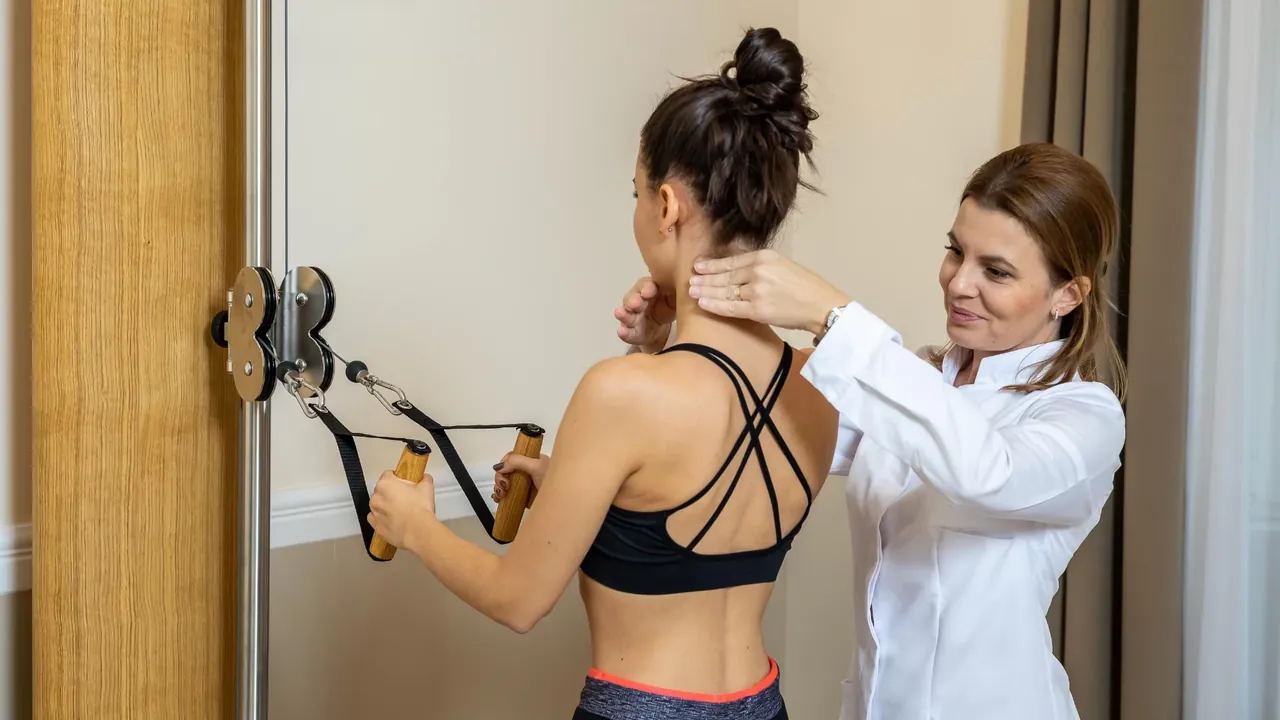
Only an examination can tell you what’s actually causing the pain – a symptom list can’t. Common directions include tendons under the top of the shoulder getting pinched and irritated when you lift your arm (impingement), overload or injury of the rotator cuff tendons (rotator cuff involvement), and the gradual, painful tightening often called frozen shoulder (adhesive capsulitis). Pain can also travel into the shoulder from the neck, which is why we always look at the neck too.
Don't wait – see a doctor if
- you have chest pain or tightness spreading to the shoulder, arm or jaw, with breathlessness or sweating – call 112 immediately
- after a fall or accident the shoulder looks deformed, or you can’t move your arm at all
- you suddenly can’t lift your arm when you could before
- you have a fever and the shoulder is red, hot and swollen
- your arm or hand goes numb or weak
- the pain is strong at night and at rest and no position eases it
No red flags, but your shoulder has hurt for weeks or keeps coming back? That’s the point to see a physiotherapist.
Book a consultation (opens in a new tab)
Shoulder pain treatment in the 13th district: what we do
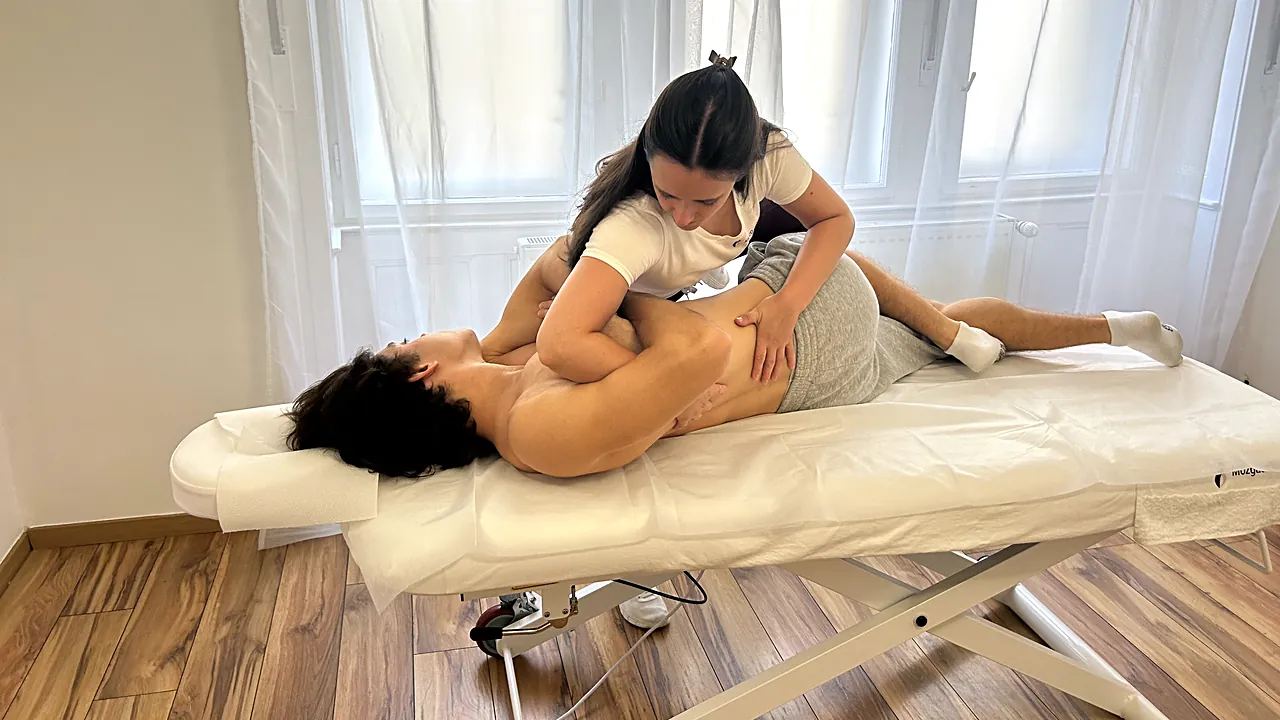
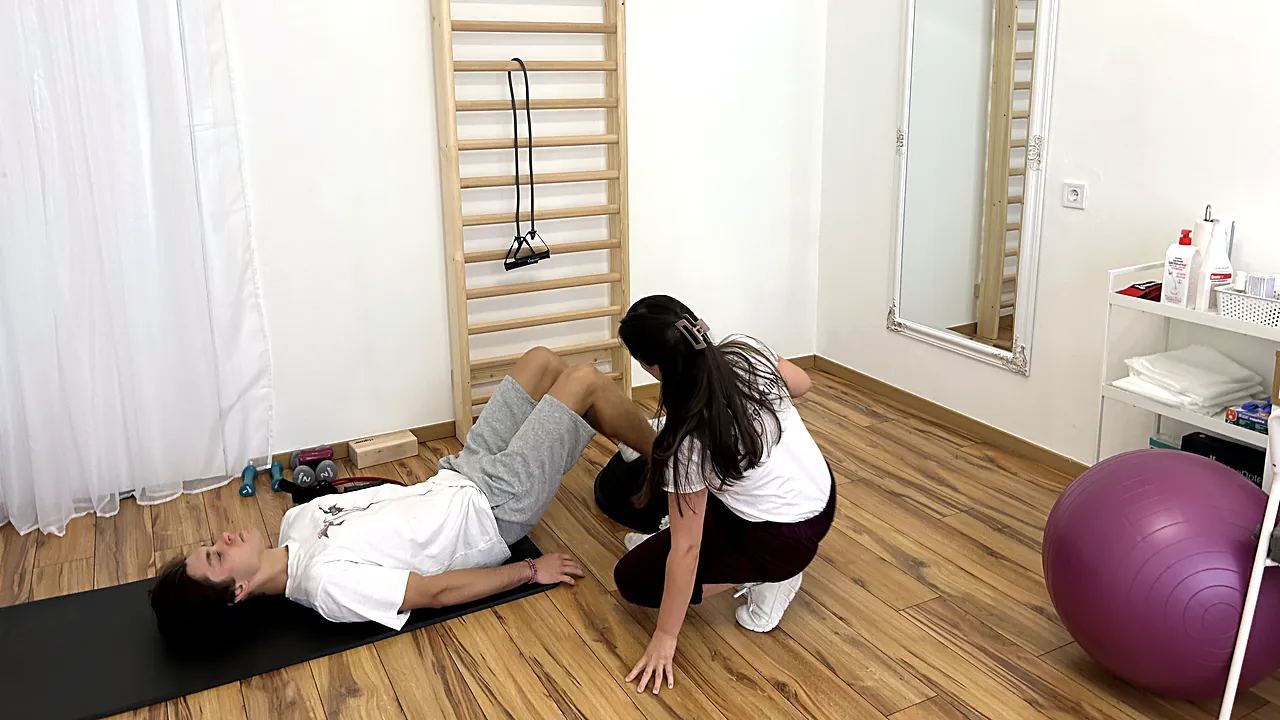
Treatment here stands on two legs. Manual therapy aims to ease pain and restore movement, working on the joint, the shoulder blade and the surrounding muscles – more on the method in our manual therapy article. Therapeutic exercise then strengthens and coordinates the muscles that keep the shoulder and shoulder blade stable, so lifting your arm works without pain again. Where it’s warranted, we may add physical therapy modalities.
Treatment follows the MozgásPiramis® (Movement Pyramid) method. The Level 1 protocol is 12 sessions, twice a week, but nobody can guarantee in advance how many sessions you’ll need – that depends on how you progress.
How it works:
- We map it out – when and on which movements it hurts, how your shoulder, shoulder blade and neck move, plus any scans you bring.
- We build a plan around you – treatment and home exercises, based on what we find.
- We start on day one – treatment begins in the same session as the assessment.
Our article on your first assessment walks through the first visit in detail.
Book a consultation (opens in a new tab)
Why the home exercises matter
You use your shoulder on all the days between sessions. Stronger muscles and better shoulder-blade control don’t come from the treatment bed; they come from the few minutes a day you put in at home.
One trap: when the pain eases, many people stop. At Level 1 of the MozgásPiramis® that’s the most common mistake – no pain doesn’t yet mean the shoulder can take full load, and stopping early raises the risk of it coming back.
Exercises are prescribed after your assessment, tailored to you. If one causes sharp pain, stop and tell us next time.
Getting here
The clinic is at Váci út 28, on the mezzanine (félemelet), between Lehel tér and Nyugati, opposite Westend, near the DM on Váci út. The M3 metro stops Lehel tér and Nyugati pályaudvar are both close, and trams 4 and 6 stop at Nyugati tér. Driving? Park in the Westend underground car park and cross Váci út (a 2–3 minute walk from both Westend and the Lehel tér metro exit). Step-by-step directions are in how to find us near Westend. Questions? Call +36 30 790 6270.
Frequently asked questions
Do I need a doctor’s referral?
As a private clinic, we see patients without a referral. If the pain started after an accident, or any of the red flags above apply, see a doctor first.
Should I bring my MRI or ultrasound results?
Yes. Reviewing imaging is part of the first consultation, so earlier MRI, X-ray or ultrasound reports help. No scans? That’s fine too.
How many sessions will my shoulder need?
That can’t be guaranteed in advance. The Level 1 protocol is 12 sessions, twice a week, but the real number depends on your problem and your progress. We’ll talk it through after the assessment.
Can I pay with foreign travel or health insurance?
We issue Hungarian invoices only and can’t fill in forms for foreign insurers, so any reimbursement is up to you to arrange with your provider. Payment is by cash, card or SZÉP card.
A shoulder is patient, but not endlessly. The sooner you find out what’s triggering the pain, the fewer things you have to give up in the meantime – from washing your hair to your laps on Margaret Island.