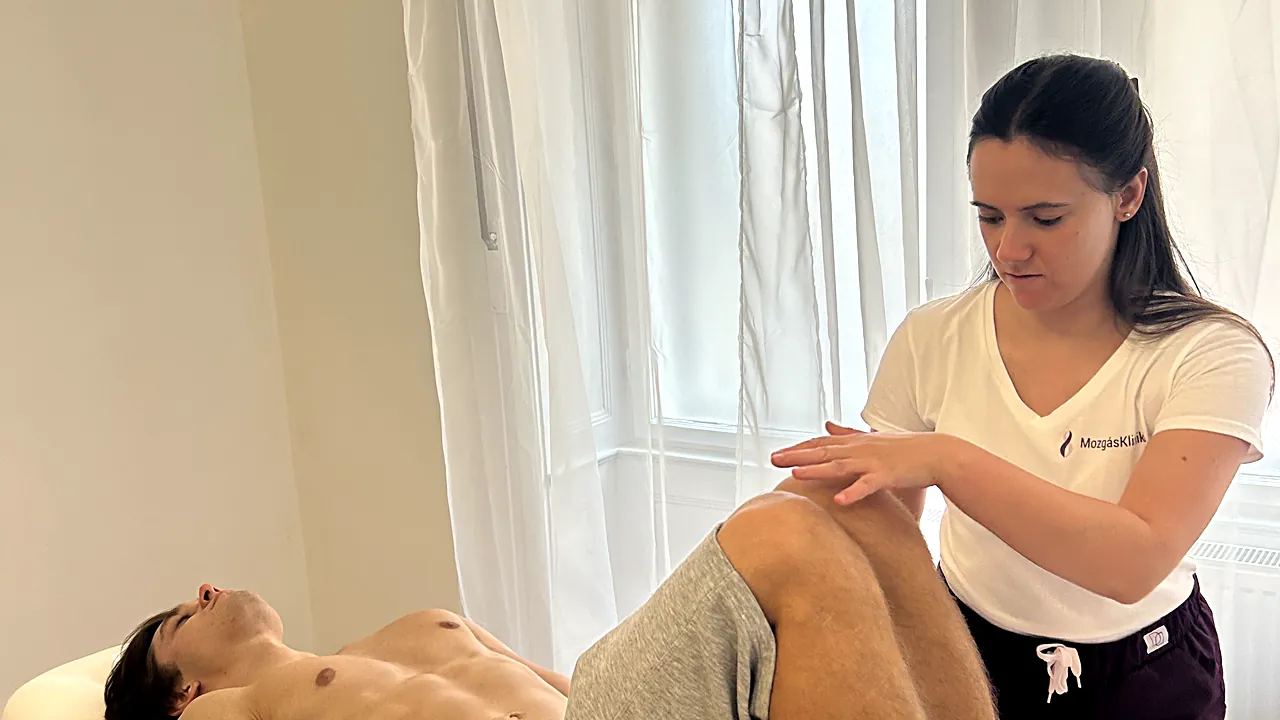
Whether your meniscus injury is treated with surgery or without it, physiotherapy helps your knee move fully again, get strong enough to cope, and feel trustworthy under you, so you can gradually get back to the things you enjoy. If you’re looking for meniscus physiotherapy in Budapest’s 13th district (XIII. kerület), MozgásKlinika Újlipótváros is at Váci út 28, opposite Westend, offering physiotherapy, manual therapy and a treatment plan built around you.
In Hungarian you’ll see this called gyógytorna – therapeutic exercise led by a physiotherapist – often combined with manuálterápia, hands-on manual therapy. Here’s what to know about the injury, what rehab is for, and how it works with us.
What does a meniscus injury feel like?
Your knee has two crescent-shaped pads of cartilage, the menisci, sitting between the thigh bone and the shin bone. They help absorb load and keep the joint stable. A meniscus tear (meniscus ruptura) can show up in different ways, but these are the typical signs:
- pain on the inner or outer side of the knee, especially when twisting or squatting;
- swelling, often building over several hours rather than straight away;
- clicking or catching, as if something gets stuck inside the joint;
- difficulty fully straightening or bending the leg;
- a sense that the knee might give way.
In younger, active people it’s often a sporting moment: a sudden change of direction while running, football, tennis, skiing – the foot stays planted and the knee turns. With age the tissue can become more worn, and then an everyday movement is enough, like standing up from a squat or a clumsy step on the stairs.
Why a doctor’s diagnosis comes first
Plenty of things cause knee pain. Symptoms alone can’t reliably separate a meniscus tear from, say, a ligament injury, so a doctor should examine you first. They’ll decide whether you need imaging (usually an MRI) and whether surgery or non-surgical treatment makes sense.
A physiotherapist doesn’t replace that decision. We build on it. If you have reports, a discharge summary or an MRI, bring them along and we’ll go through them at your first assessment.
Book a consultation (opens in a new tab)
When to see a doctor straight away
- Your knee has locked and you can’t straighten it.
- It swells up suddenly and badly, or you can’t put weight on the leg.
- After surgery you develop a fever, or the wound becomes red, warm or starts to discharge.
- Your calf is painful, swollen or tight – this can be a sign of a blood clot.
- Pain keeps getting worse despite treatment, or new symptoms appear.
What meniscus physiotherapy in the 13th district aims for
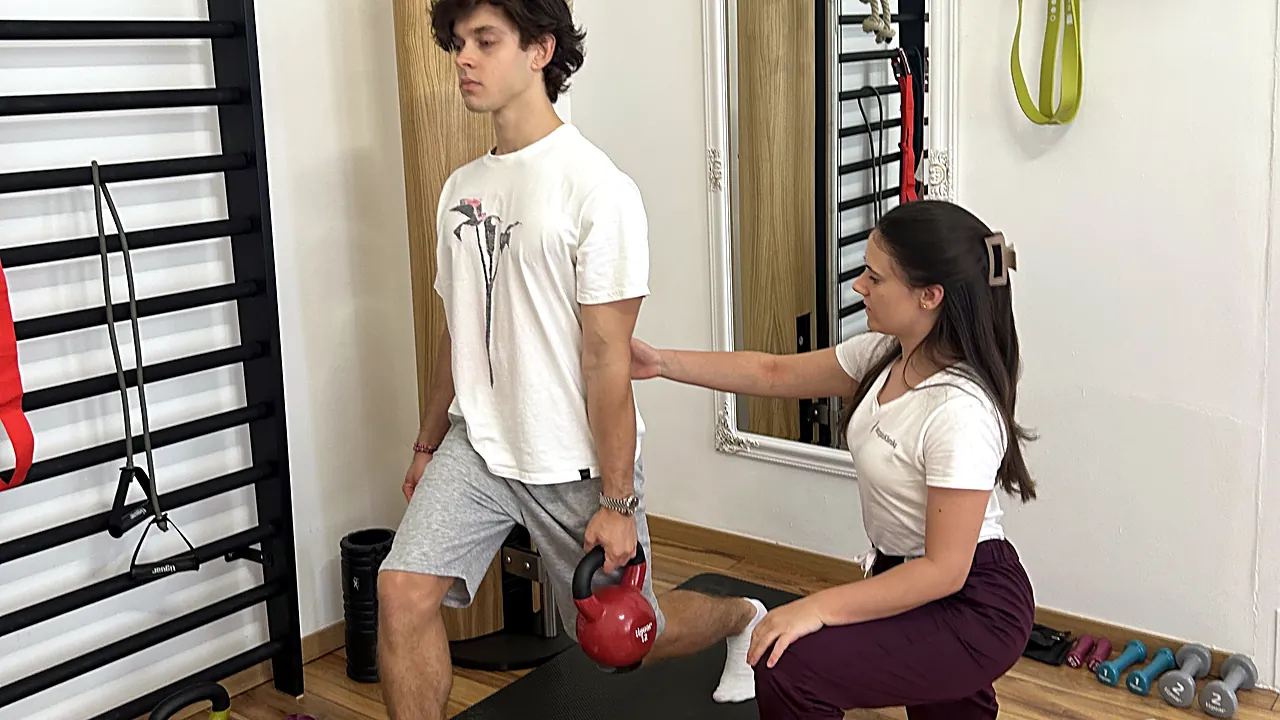
Rehab isn’t one set of exercises. It’s a process with several goals. The first is getting your range of movement back, so the knee bends and straightens properly. Then comes strengthening the thigh and hip muscles, which take load off the joint and steady it, followed by balance and knee control – knowing exactly where your leg is on stairs, on uneven ground or when you change direction.
The fourth goal is quieter: rebuilding confidence. After an injury many people start protecting the knee, avoiding squats and stairs, and that protecting weakens the leg further.
After surgery
In rehab after meniscus surgery, your surgeon’s instructions always come first: how much weight you can take, whether you need crutches, how far you may bend the knee, and what’s allowed when. Your physiotherapist plans the steps inside that framework and keeps an eye on how the knee responds.
Without surgery
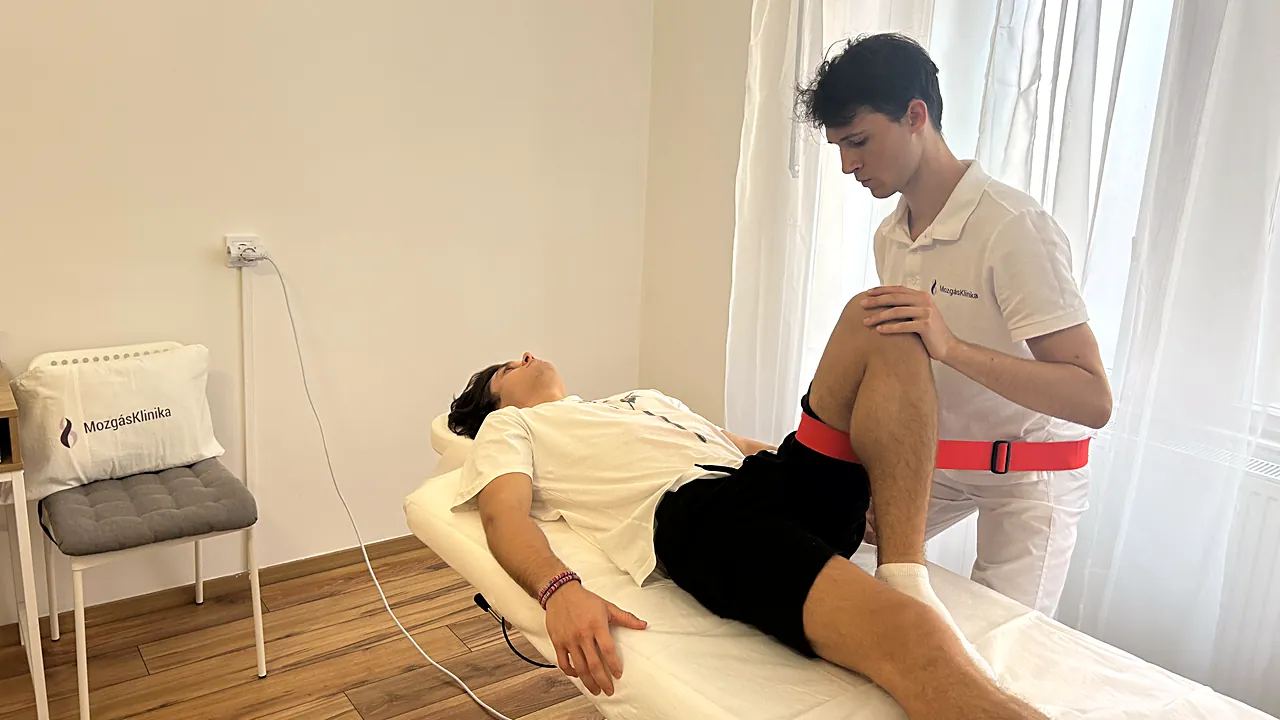
Many meniscus injuries are treated conservatively. Then physiotherapy is the backbone of treatment, with the aim of getting your muscles and movement pattern working well enough that symptoms settle and the knee copes with daily life. If the joint or surrounding tissues have stiffened, manual therapy can play a part too.
How knee rehab works at our Váci út clinic
- We map out the problem – we go through your reports, ask about your history, and look at your hip, ankle and movement pattern as well as the knee.
- We tailor the treatment plan to you – using the MozgásPiramis® (Movement Pyramid) method, we decide where to start and where you’re heading.
- We get started at the very first visit – the assessment isn’t separate paperwork; treatment begins in the same session.
The Movement Pyramid runs from pain relief through joint range of motion, strength and functional stability to the return to full activity. Where a knee rehab starts and how fast it moves differs from person to person, so we don’t promise a number of sessions in advance. The most common mistake is stopping as soon as the pain eases. At that point the knee often isn’t strong enough yet.
If you have a specific sport in mind, we’ll prepare you for that at the end. There’s more in our articles on sports injury rehabilitation and runner’s knee for Margitsziget runners. Once rehab is done, Medical Fitness can be the next step.
Book a consultation (opens in a new tab)
Why it helps to have the clinic close by
Knee rehab depends on consistency. Several sessions a week for a number of weeks is only realistic if getting there isn’t a half-day expedition.
Váci út 28 makes that easy. It’s a short trip from Újlipótváros and Angyalföld, close to the M3 metro stops at Lehel tér and Nyugati pályaudvar, and trams 4 and 6 stop at Nyugati tér. It’s about a 2–3 minute walk from the Lehel tér metro exit and about 8 minutes from Nyugati pályaudvar. If you drive, you can park in the Westend underground car park and simply cross Váci út. The clinic is on the mezzanine floor, and after a few steps a lift takes you up – which matters when you’re on crutches after surgery. Full directions are in our getting-here guide.
If you work along Váci út, sessions may fit before or after work. (Monday to Friday, 8:00–20:00) Whether you’re looking for an experienced physiotherapist in the 13th district or specifically for knee rehab, you can also call us on +36 30 790 6270.
Frequently asked questions
What should I bring to the first appointment?
Anything relating to your knee: MRI, doctor’s reports, and after surgery your discharge summary and the surgeon’s instructions. Wear or bring comfortable clothes that let us see and move the knee freely, such as shorts. Reports in Hungarian or English are both fine to bring.
When can I start physiotherapy after surgery?
Your surgeon decides this, and it depends on the type of operation. If you’re unsure, ask them and bring their instructions – we’ll build the plan around them.
How many sessions will I need?
Nobody can say in advance, because it depends on the injury, any surgery and how your knee responds. MozgásKlinika’s first-level protocol is 12 sessions, twice a week, but your actual plan is always set after the assessment.
Can I use my insurance or a SZÉP card?
You can pay by cash, bank card or SZÉP card, and Hungarian health-fund invoices are available. We issue Hungarian invoices only and can’t fill in forms for foreign insurers, so claiming reimbursement is up to you. More in our guide to health funds and SZÉP cards.
A knee can handle a lot when it gets time and the right kind of work. If your injury is recent, or you’re looking for the next step after surgery, come in for an assessment and we’ll work out together how to get you back to the stairs, the running loop or the pitch.